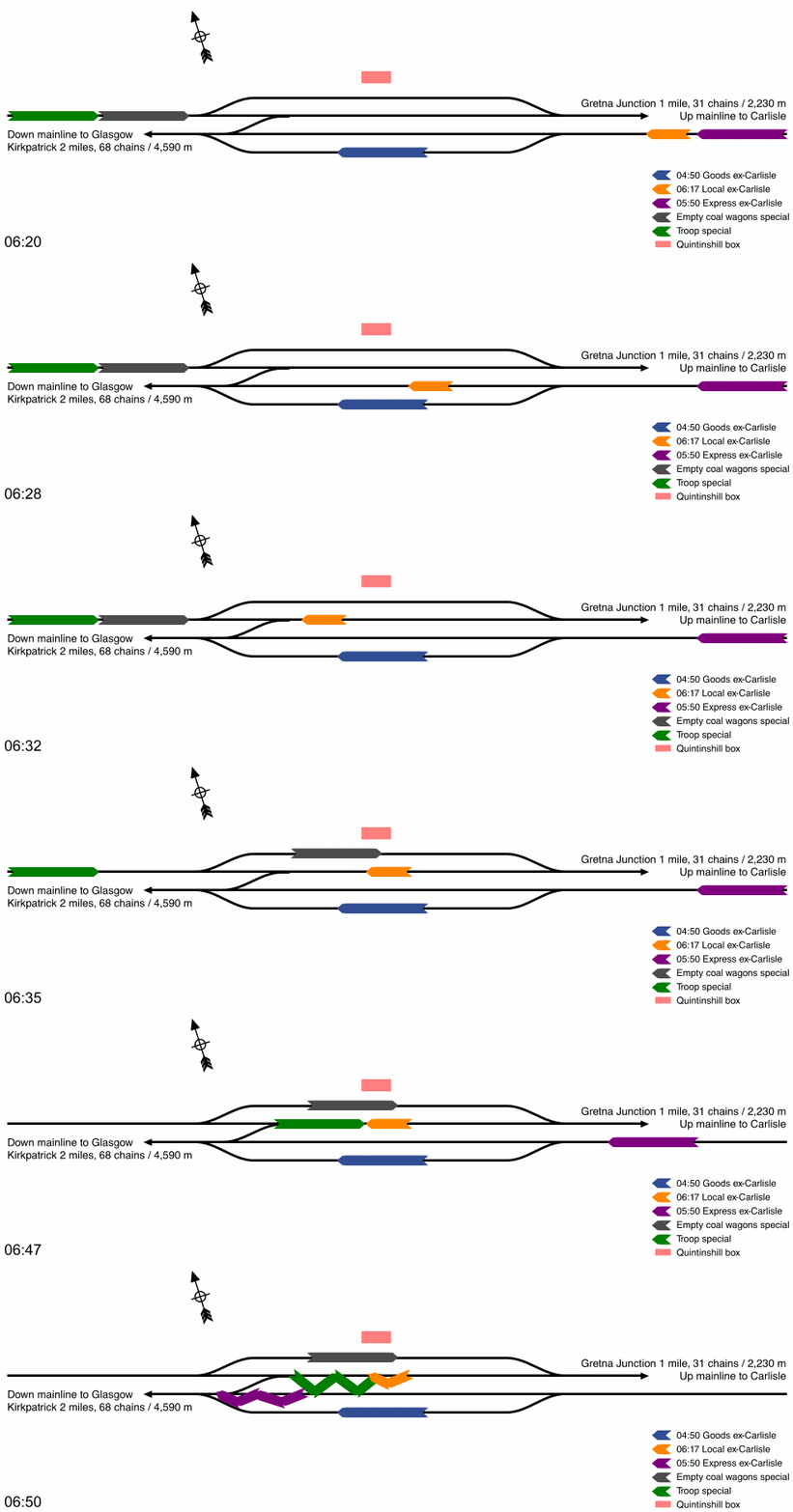
— Last Post Ass. Ieper (@lastpostieper) July 9, 2015
As part of the commemoration of the milestone the Last Post Association have developed an app, issued an brochure and published a book. The main picture for each of these features the Last Post Ceremony of Saturday 6th October 2012. On parade were the Tyneside Scottish Branch Royal Artillery Association, Tyneside Scottish Cadets from Northumbrian ACF, led by the Somme Battlefield Pipe Band.
On the 18th May 1915 the Tyneside Scottish Brigade paraded on the pastures in front of Alnwick Castle to be inspected by His Grace the Duke Of Northumberland.
TS Brigade inspected by His Grace Duke of Northumberland 18th May 1915
To commemorate the occasion a Beating of Retreat was held in Alnwick Castle. The occasion had an international flavour with the presence of the Somme Battlefield Pipe Band (SBPB) from Peronne in France. The SBPB commemorate the fallen in both World Wars by each individual member of the band wearing a uniform of a Scottish Regiment.
The massed Pipes and drums consisted of the Tyneside Scottish Pipe Band, Somme Battlefield Pipe Band, and the Northumbria & Lothian Borders ACF Pipe Bands.
Massed Pipes and Drums enter Alnwick Castle
Massed Pipes and Drums march on
Massed Bands Music Display
Highland Dancers
Massed Bands March Off
Somme Battlefield Pipe Band march on
Somme Battlefield Pipe Band marching display
Somme Battlefield Pipe Band
Somme Battlefield Pipe Band Pipers
Somme Battlefield Pipe Band
Somme Battlefield Pipe Band march off
Combined Bands
Massed pipes and Drums form up
Massed Pipes and Drums March on
Massed Pipes and Drums Highland Cathedral
Video of the Tri-Service Pipes and Drums, Somme Pipes and Drums and 101 Regiments Tyneside Scottish Pipes and Drums playing Highland Cathedral at last nights beating retreat in Alnwick Castle.
The stalemate on the Western Front dominated by trenches, fortifications and the machine guns created the problem of how to breach the enemy front line and achieve a breakthrough.
The problem - Fortifications and the Machine Gun
Winston Churchill formed the Admiralty Landships Committee in February 1915, tasking them with developing a war engine able to cross a 5-foot (1.5 m) trench. Initial experiments by an agricultural firm, William Foster & Co. of Lincoln, using imported American tracks failed. William Tritton, a director of William Foster & Co, and Lieutenant Walter Gordon Wilson, a Royal Naval Reserve Officer, came up with a new design. On the 9th September 1915 the No 1 Lincoln Machine, nicknamed Little Willie made it's first test run.
Little Willie Bovington Tank Museum
The trials with Little Willie ledto the development of an effective track system, however the low profile was not adequate for the Western Front. This led to the development of a rhomboid shaped vehicle which would become the go forward design in World War One.
The shape of the vehicle was necessary as a long track was required to enable the crossing the wide trenches prevalent on the Western Front battlefields. The guns were at the side in sponsons. German defensive parapets could be up to 4 feet high, a turret on top would have been top heavy when moving across the defences. The prototype was ready by December 1915, and the term tank began to be used in order to maintain secrecy and disguise it's true purpose.
The first tank was demonstrated in early 1916 and impressed David Lloyd George, Minister of Munitions who arranged for his ministry to take responsibility for their production. The first order for tanks was placed on 12 February 1916.
On the 15th September 1916, the tank was used in battle for the first time at the Battle of Flers Courcellete on the Somme.
British Mark I Tank Bovington Tank Museum
Tanks were classified as Male, mounting 6 pounder guns, or Females mounting machine guns. Minor improvements were made to the first tanks leading to the introduction of the Mark II in January 1917.
British Mark II Tank Bovington Tank Museum
British Mark II Tank Bovington Tank Museum
Tanks would have a crew of 8. A commander, driver, two gearsman, two gunners and two loaders.
Tank Commander
Gearsman
The Mark IV tank, which was an up armoured Mark II went into production in May 1917, going into action at the Battle of Messines Ridge in June 1917.
British Mark IV Tank Bovington Tank Museum
The first use of large numbers of tanks was the Battle of Cambrai 20th November to 7th December 1917.
A new design was introduced in 1918, the Mark V which was first used in the Battle of Hamel in July, and they were used during other battles during the 100 Day Offensive. Some went to Russia when the allies intervened in the Russian Civil War in 1919.
British Mark V Tank Bovington Tank Museum
The first German tank, the Sturmpanzerwagen A7V did not go into production until October 1917. It was equipped with six 7.92 mm MG08 machine guns and a 5.7 cm Maxim-Nordenfelt cannon, with a crew of 18.
German Sturmpanzerwagen A7V Tank Bovington Tank Museum
On the 22nd May 1915 the worst rail disaster in the UK occurred at Quintinshill near Gretna Green, Scotland. The collision that occurred and the subsequent fire resulted in over 220 killed and 240 injured. The majority of casualties were from 1/7th Battalion Royal Scots, Territorials from Edinburgh, heading to Gallipoli.
Quintinshill near Gretna Green
Quintinshill is on the main West Coast railway line from London Euston to Glasgow. At the location are two passing loops where slower trains can be held in order that express trains can pass. In 1915a signal box was located at Quintinshill overlooking the passing loops.
Quintinshill - Track layout
Quintinshill - Signal Box
On the morning of the 22nd May a troop train containing half of the 1st / 7th (Leigh) Battalion Royal Scots, 498 men, left Larbert Station, Stirlingshire en route to Liverpool to board a troop train. The Battalion were Territorials, mobilised in 1914, and were on their way to join the fighting in Gallipoli.
Caledonian Railway McIntosh 4-4-0 no 121 Locomotive headed the troop train to Liverpool.
The troop train was a high priority and any slower train on it's route would need to let it pass. Despite the additional traffic on the main line generated by the war effort, the London-Glasgow expresses continued to be given priority. On the morning of 22nd May, two priority trains, the troop train from the north, and an express from the south were approaching Quintinshill.
To ensure they were not delayed, a goods train had been routed into the up line passing loop (northbound) whilst an empty coal wagon special has been routed into the down line passing loop (southbound), thus both passing loops were occupied.
At 06:17 a local train proceeding north from Carlisle arrived in Quintinshill which needed to be held there in order to allow the passage of a north bound express train. With both passing loops occupied, the signal man had no choice other than to shunt the train onto the southbound line, hold it there and allow the express to pass. It would however block the passage of the south bound troop train.
Quintinshill - North bound local train
Quintinshill - Local Train on Southbound mainline
The situation 06:37 22nd May was the northbound mainline was clear to allow the London-Glasgow to pass, the southbound line was blocked, and the troop train would need to be held till the local train could be shunted back onto the line north.
Quintinshill - 22nd May 1915
The signalmen at Quintinshill should have changed over at 06:30. However, a practice had been adopted whereby the incoming signalman, to save a mile and half walk, would catch the local train from Gretna. When it was held at Quintinshill, he would dismount and proceed to the signal box to take over the shift. To cover the practice, the train register was not filled in, any movements were recorded on a scrap of paper, and the register would be updated with the details by the incoming signal men in his hand writing.
On the morning in question, George Meakin, who had worked the night shift, was relived by James Tinsley who had just arrived on the local train which had been shunted onto the southbound line. As well as the breach of regulations on the handover, the firemen from the trains held were in the signal box which could have been distracting to Tinsley. A further breach of rules had taken place as the firemen from the local train should have checked that a collar had been placed over the signal lever which controlled the entry into the Quintinshill sector, physically stopping the signal at the beginning of the sector being set to clear, thus protecting the train on the southbound line.
Although having just arrived on the local train, possibly distracted by updating the train register and the firemen in the signal box, Tinsley accepted a signal to receive the troop train into the Quintinshill sector on the south bound line blocked by the stationary local train.
Four minutes later, he accepted a northbound express onto the clear north bound line.
Quintinshill - situation 06:49 22nd May 1915
At 06:49 22nd May 1915 the troop train containing the 1/7th Royal Scots collided head on with the stationary local train.
The troop train overturned, mostly onto the neighbouring north-bound mainline track and, a minute later, the Glasgow-bound express ploughed into the wreckage causing it to burst into flame. The troop train carriages were old obsolete wooden stock with gas tanks underneath and this led to a ferocious fire.
Quintinshill Rail Disaster 22nd May 1915
Quintinshill Rail Disaster 22nd May 1915
It was estimated that 226 people were killed and 246 injured in the accident. The 1/7th (Leigh) Battalion Royal Scots lost 216 all ranks in the disaster. Out of the half battalion of 498 men, only 64 paraded after the disaster.
Quintinshill Rail Disaster CO 1/7th Royal Scots musters the 64 unscathedsurvivors