YPRES
Saturday, 8 March 2025
Ex Magpie Progress - 50th Northumbrian Division Memorial
The 50th Northumbrian Division memorial located in the village of Wieltje near where the Division fought its first action in April 1915 during the Second Battle of Ypres.
| 50th Northumbrian Division Wieltje |
The memorial records the units who served with the 50th Northumbrian Division during the First World War.
| 50th Northumbrian Division Memorial Units that served in the Division |
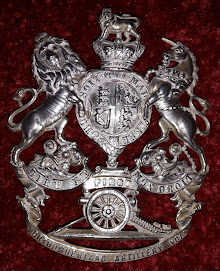
Amongst the recorded on the memorial are those lineage links to 101 (Northumbrian) Regiment Royal Artillery .
The 1st (Northumbrian) Brigade Royal Field Artillery TF included the 3rd Northumbrian Battery (later C/250) from Elswick which links to 203 (Elswick) Battery based in Blyth.
The 4th (Northumbrian) Brigade Royal Field Artillery TF included the 4th (Durham) Howitzer Battery (later D/250) from South Shields links to 205 (3rd Durham Volunteer Artillery) Battery based in South Shields.
An act of remembrance was held by members of 101 Regiment RA to remember those lost from the Northumbrian Gunners.
| 50th Northumbrian Division Memorial Exhortation |
| 50th Northumbrian Division Memorial Remembering the Fallen |
Ex Magpie Progress 25 - 49 West Riding Division Memorial
The 49th (West Riding) Division Memorial is located on the bank of the Yser Canal adjacent to the Essex Farm Cemetery.
| 49 (West Riding) Division Memorial Ypres Canal |
| 49 (West Riding) Division Memorial |
It is dedicated to the memory of more than 9,500 men killed whilst serving with the 49th (West Riding) Division during World War One. At least 1,000 of those died between 7 July and 31 December 1915 when the Division first manned the trenches north of Ypres.
To the memory
of all ranks of
the 49th West Riding Division
who gave their lives for
King and Country
in the Great War
1914-1918
The memorial records the Battles in which the 49th (West Riding) Division were engaged;
1915: Aubers / Ypres
1916: The Somme / Thiepval / Schwaben Redoubt
1917: Nieuport / Poelcapelle
1918: Neuve Eglise / Kemmel/ Wijtschate / River Selle / Valenciennes
The 49th (West Riding) Divisional Artillery included;
• Divisional Artillery HQ: Red House, Marygate, York
• I West Riding Brigade RFA - HQ Leeds -> Batteries @ Leeds
• II West Riding Brigade, RFA–HQ Bradford -> Batteries @ Bradford / Halifax / Heckmondwike
• III West Riding Brigade, RFA - HQ Sheffield -> Batteries @ Sheffield
• IV West Riding (Howitzer) Brigade, RFA –HQ Otley -> Batteries @ Otley / Ilkley
Friday, 7 March 2025
Sunday, 15 March 2020
Ypres 2020 - Menin Gate Last Post
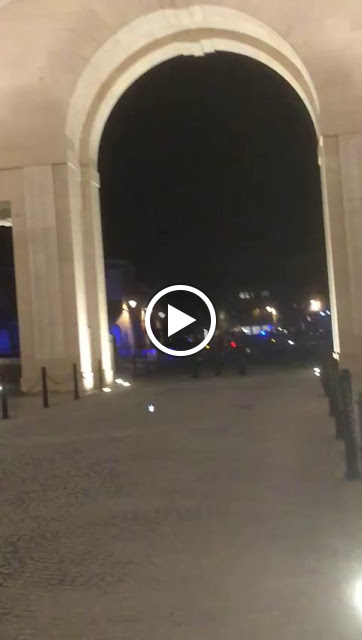
On the 14th March 2020, Belgium went into a lockdown as part of the response to the Covid-19 virus. The Last Post Association announced that public attendance at the daily 20:00 ceremony was suspended. The Fire Brigade buglers would continue with the daily ceremony in remembrance of the soldiers of the British Commonwealth.
The ceremony on Sunday 15th March 2020 was conducted with no crowds and no formal ceremony, only the buglers sounding Last Post.
Menin Gate Last Post
Sunday 15th March 2020
|
Ypres Cloth Hall
Sunday 15th March 2020
|
Ypres 2020 - LEGO Menin Gate
| LEGO Menin Gate |
Located in the Commonwealth War Graves Commission information centre in Ypres is a LEGO model of the Menin Gate. The model consists of 54,000 bricks, one for every casualty named on the Menin Gate.
| LEGO Menin Gate |
| LEGO Menin Gate inscription |
LEGO Menin Gate
Buglers and Pipe Band
|
LEGO Menin Gate
Spectators
|
![]() |
Op Drum - Menin Gate 2012
Somme Battlefield Pipe Band
|
![]() |
| CWGC Information Centre Ypres |
Ypres 2020 - Fray Bentos Tank
At Pond Farm on the N313, 11km north east of Ypres (near St Julian) is a replica WW1 tank. It commemorates the longest tank action of World War One.
| Replica WW1 Tank - Pond Farm St Julian |
| Replica WW1 Tank - Pond Farm St Julian |
The tank was F41 'Fray Bentos' of F Battalion 3rd Tank Brigade, nicknamed after a tinned corned beef supplied to troops during WW1. A working replica has also been built.
![]() |
| F41 Fray Bentos working replica |
![]() |
| H41 Fray Bentos diched in No mans Land St Julian |
The tank was left stranded when the British infantry was forced to withdraw at 07:00. The Germans attempted to seize the tank, but the tank crew firing their 6 pounder gun held them off. On the night of the 22nd, Germany infantry got on the roof of the tank, British infantry thinking it had been captured and turned into a strong point fired on F41. The crew were now caught in cross fire from German and British infantry.
![]() |
| German infantry attack F41 Fray Bentos |
The following day the crew of Fray Bentos continued to enage the enemy. On the evening of the 23 / 24 August the Germans once again attacked the tank, and were beaten off.
![]() |
| German infantry night attack on F41 Fray Bentos |
By dawn of the 24th one crewman was dead, all but one man were wounded and ammunition was low. One crew member manged to crawl back to British lines to outline the predicament of the crew, so firing on the tank by friendly forces ceased. This allowed the remaining crew to make their escape during the night.
Their actions resulted in the crew becoming the most most highly decorated tank crew in WW1.
Ypres 2020 - Hill 60 Memorials
Hill 60 is now a Battlefield Memorial Park containing a number of memorials.
Hill 60 Battlefield Memorial Park
It was taken over by the Imperial War Graves Commission in 1930 and the site is maintained in the state in which it was left after World War One.
A memorial stone records the history of the Hill 60 from 1914 to 1918.
| Hill 60 Memorial Park Commemoration Stone |
| Queen Victoria Rifles Memorial |
![]() |
2.Lieut Geoffrey Woodley VC
Queen Victoria Rifles
|
| 1st Australian Tunnelling Company Memorial |
1st Australian Tunnelling Company Memorial
Damage from WW2 visible
|
![]() |
Officers 1st Australian Tunnelling Company
23rd June 1917
|
| 14 Light Division Memorial |
14 Light Division Memorial
Divisional Artillery
|
Ypres 2020 - Hill 60
| Hill 60 German bunker IJ |
Hill 60 takes it's name from a spoil heap formed during the construction of the railway line from Ypres - Comines, which opened in opened in 1854.
| Ypres - Comines Rail Line |
Before World War One the mound left from the digging of a rail cutting was called "La Côte des Amants", Lovers Knoll. The spoil excavated was piled either side of the railway cutting. On the west side, a 270 metre long ridge known as the Caterpillar resulted, on the east side, a mound 60 feet high (18 metres) gave the feature it's name. Hill 60 would provide an excellent view of Ypres and Zillebeke.
To the south west of Hill 60 is St Eloi and the Messines Ridge running 12 km south through the villages of Wystsheate and Messines to Ploegstreet Wood.
The Hill was initially held by the French, however it was captured by the Germans in December 1914 during the First Battles of Ypres. The British took over from the French in the sector on the night of 1/2 February 1915.
The importance of the hill for artillery observation made the feature vital ground and the struggle for control would result in bitter fighting over the next four years. A tunnelling war developed with both sides blowing mines to destroy defences as part of the efforts to secure the feature.
In March 1915 tunnelling work commenced to place five mines underneath Hill 60. These were blown on the morning of 17th April, their effect not only destroyed German defences, it blew the top off the hill reducing it's height to less than 20 feet (6 metres) metres, leaving prominent craters. The 1st West Kents and 6th Kings Own Scottish Borderers quickly overcame the defenders and consolidated their position.
![]() |
| Hill 60 Mine Craters |
The hill was retaken by the Germans during the afternoon of 18th April after three attacks, however, by the evening a British counter attack regained the lost ground . An German attack on the 21st April, prior to the Second Battle of April was repulsed. It was during this action that Second Lieutenant Geoffrey H Woolley, serving with Queen Victoria's Rifles [9th (County of London) Battalion London Regiment], was awarded the Victoria Cross, the first VC to be awarded to a Territorial Officer.
![]() |
| Defence oh Hill 60 19-21 April |
![]() |
2.Lieiut Geoffrey Wooley Victoria Cross Action
Defence of Hill 60 Queen Victoria Rifles - 9th London Regiment
|
Hill 60 would once again fall to the Germans in May 1915. A A series of gas attacks starting on the 1st of May and bitter fighting finally resulted in the Germans regaining the hill on the 5th May. British counter attacks on the 7th May failed to remove the enemy defenders.
![]() |
| Hill 60 Trench Map August 1916 |
Hill 60 Front Lines
British Front Line - German Front Line
|
![]() |
| Caterpillar |
![]() |
| Hill 60 |
In August 1915 tunnelling operations began on two mines, one under the Caterpillar, the other under Hill 60 to prepare for a future campaign in Flanders.
Hill 60 and the Caterpillar would remain in German hands for nearly two years. This gave the Germans the opportunity to strengthen their positions including the building of strongpoints and bunkers.
![]() |
| German fortifications Hill 60 |
| German bunker Hill 60 |
At 03:10 on 7th June 1917 following a the 12 day preliminary bombardment, mines under Hill 60 and Caterpillar were detonated.
![]() |
| Battle of Messines Mines |
The 23rd Division on the extreme left flank of Second Army's assault on the Messines Ridge were tasked with seizing Hill 60 and the Caterpillar. Leading the X Corps attack with axis an on Hill 60, were the 69th and 70th Brigades who were able to seize the shattered remains of the German defences. The 68th Brigade, which included the 10th and 11th Battalions Northumberland Fusiliers, and 12th and 13th Battalions Durham Light Infantry would follow on to consolidate the objectives.
![]() |
| Hill 60 destroyed German bunker |
In April 1918 the German Army launched the second of it's Spring Offensive operations, Operation Georgette. The British were pushed back to the River Lys and once again Hill 60 changed hands and it was back under German control. On the 11th April 1918 Field Marshall Haig issued his 'backs to the wall' message urging no further retreat of British Forces, and the German advance faltered. Despite further German attemps to breakthrough, notably on the River Aisne, the Spring Offesive failed.
In August 1918 the Allies went on the offensive forcing the Germans into a retreat. An Army Group commanded by King Albert of the Belgians launched an offensive in Flanders in September, and on the 28th September Hill 60 was regained by the Aliies, and would remain in their hands till the Armistice, November 11 1918.
A memorial plaque on Hill 60 records the fight for control over four years of war.
| Hill 60 Commemoration Stone |
| Hill 60 Commemoration Stone |
Hill 60 had seen many major actions over the four years of war resulting in thousands of casualties, many of whom remain buried in the ground of the hill as it was pulverised by artillery and mine explosions.
| Hill 60 WW1 |
The site is maintained by the Commonwealth War Graves Commission and regarded as a war grave as remains of those killed during the bitter fight still lie beneath the land.
| Hill 60 2020 |
| Hill 60 Donkeys |