Blog Search


Showing posts with label Royal Armouries. Show all posts

Saturday, 13 December 2025

Royal Armouries - 101 RA Xmas Function

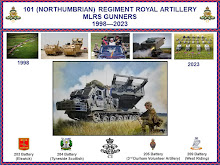
 Royal Armouries Leeds - 101 (Northumbrian) Regiment Royal Artillery Christmas Function.

IJ and Knight

Men At Arms

Battle of Patavia 1524

Battle of Patavia 1524

English Civil War

English Civil War Roundhead


Saturday, 4 September 2021

Leeds 2021 - Royal Armouries NVAA Battlefield Tour


Royal Armouries Leeds
NVAA Battlefield Tour 2021

Leeds 2021 - Royal Armouries Tudors


Royal Armouries Leeds

Royal Armouries Leeds
Field of the Cloth of Gold

The Field of the Cloth of Gold was a summit between Henry VIII of England and King Francis I of France. The meeting lasted from 7th to 24th June 1520. It's aim was to foster Anglo-French relationships. It was held at Balinghem which was in the English Pas de Calais. 

The 14 day meeting was also a festival of music, joisting, fighting tournaments, and huge feasts. Each King looked to outshine the other, the ostentatious display of costumes, tents and decorations woven with golden thread leading to the occasion being termed the Field of the Cloth of Gold. 

Royal Armouries Leeds
Field of the Cloth of Gold Henry VIII

Royal Armouries Leeds
Field of the Cloth of Gold

Royal Armouries Leeds
Field of the Cloth of Gold

Royal Armouries Leeds
Field of the Cloth of Gold

Royal Armouries Leeds
Field of the Cloth of Gold

Royal Armouries Leeds
Tudor fighting demonstration

Royal Armouries Leeds
Tudor fighting demonstration

Royal Armouries Leeds
Tudor fighting demonstration


Leeds 2021 - Royal Armouries


Royal Armouries Leeds

Royal Armouries Leeds

Royal Armouries Leeds
Hall Of Steel

Royal Armouries Leeds
Hall of Steel

Royal Armouries Leeds
Battle of Pavia 1525

Royal Armouries Leeds
Battle of Pavia 1525

Royal Armouries Leeds
Men at Arms

Royal Armouries Leeds
Men at Arms

Royal Armouries Leeds
Men at Arms

Royal Armouries Leeds
Littlecote House Armoury

Royal Armouries Leeds
Littlecote House Armoury

Royal Armouries Leeds
War Elelphant

Royal Armouries Leeds
Samurai

Royal Armouries Leeds
Samurai

Royal Armouries Leeds
Tiger Shoot

Royal Armouries Leeds


Monday, 25 May 2015

Royal Armouries - Machine Guns

Rapid fire weapons which could be characterised by the ability to provide multiple shots were in existence as early as 1580. The ability to achieve automatic loading and high rates of fire came in 1862 with the American Gatling Gun.

The Gatling gun consisted of multiple barrels on a cylinder which was rotated by hand which provided sequential firing and reloading. Although replaced by the machine gun, modern Gatling guns are able to combine automatic firing with multi-barrelled weapons.


 The first automatic weapon which reloaded by the recoil power of the previous round fired was the Maxim gun invented by Sir Hiram Maxim in 1884.

In 1896 the Vickers Company acquired the Maxim Company and improved the design of the Maxim gun to produce the Vickers Machine Gun.


The British Army formally adopted the Vickers gun as its standard machine gun on 26 November 1912.

Vickers Machine Gun Mk III 1913
 In 1911, US Army Colonel Isaac Newton Lewis invented the Lewis Gun. Lewis had difficulties persuading the US Army to adopt the gun, so he retired and moved to Belgium in 1913. He established the Armes Automatique Lewis company in Liège to facilitate commercial production of the gun. Lewis had been worked closely with the Birmingham Small Arms Company Limited (BSA), and in 1914 they purchased a licence to manufacture the Lewis machine gun utilising the British .303 round. In 1914, Lewis moved his Belgian factory to England.

The Lewis Gun was approved for service on the 15th October 1915.


Lewis Light Machine Gun Mk 1 1916
The Lewis Gun was adopted as a light machine gun and issued to infantry units. The Vickers machine guns were withdrawn from the infantry units, and grouped together of a newly formed Machine Gun Corps.


The Long, Long Trail: the British Army in the Great War

The Machine Gun Corps (MGC) was created by Royal Warrant on October 14 followed by an Army Order on 22 October 1915. The MGC would eventually consist of infantry Machine Gun Companies, cavalry Machine Gun Squadrons and Motor Machine Gun Batteries.

A depot and training centre was established at Belton Park in Grantham, Lincolnshire. A total of 170,500 officers and men served in the MGC, of which 62,049 were killed, wounded or missing. Seven members of the MGC were awarded the Victoria Cross.

The MGC was disbanded in 1922.

Royal Armouries Leeds - Machine Gun Corps Equipment 
Royal Armouries Leeds - Machine Gun Corps Medal
Royal Armouries - Machine Gun Corps
Trench Art & Chinaware 


Saturday, 23 May 2015

Royal Armouries Leeds - Indian Mutiny

Pattern 1853 Enfield Rifle
 
The Pattern 1853 Enfield Rifle was a muzzle a .577 calibre Maine-type (a French invention allowing rapid loading)  muzzle-loading rifle-musket, used by the British Empire introduced in 1853. It had a range of 1,250 yards (1,140 metres). 
 
The ammunition was self contained in a cartridge which had the powder and bullet together in a paper wrapping.
 
Pattern 1853 Cartridge
To load the rifle soldiers had to bite open the cartridge, pour the gunpowder contained within down the barrel, ram the cartridge (which included the bullet) down the barrel, remove the ram-rod, bring the rifle to the ready, set the sights, add a percussion cap, present the rifle, and fire.


The Enfield P53 was introduced to Indian troops under British colonization in 1856, and issued to the Sepoys of the British East India Company in 1857. Rumours began to spread that the cartridges were greased with animal fat. The possibility of it being beef offended Hindu's, if it was pork it would offend Muslims. This resulted in the Sepoys in Meerut refusing to perform rifle drills using the cartridge and them being court marshalled.
 
The Sepoys mutinied on the 10th May 1857 triggering the start Indian Rebellion  


Indian Sepoy Uniform & Pattern 1853 Enfield Rifle


Friday, 22 May 2015