Blog Search


Showing posts with label D-Day. Show all posts

Thursday, 12 March 2026

Ex Magpie Progress 26 - Arromanches D-Day 75 Garden

 Located on the clifftops at Arromanches overlooking Gold Beach is the D-Day 75 Garden, opened in 2019 on the 75th anniversary of the Normandy Landings.

Arromanches D-Day 75 Garden IJ

Arromanches D-Day 75 Garden

Arromanches D-Day 75 Garden

Arromanches D-Day 75 Garden

Arromanches D-Day 75 Garden

Arromanches D-Day 75 Garden


Thursday, 16 February 2023

London - Waterloo Station Victory Arch

 The entrance to Waterloo Station features an impressive archway which was built by the London and South Western Railway after the First World War to remember the 585 employees of the railway who lost their lives during the conflict.

Waterloo Station Victory Arch


The London and South Western Railway was formed in 1840 and has major routes to the South Coast to Southampton, Portsmouth and Plymouth. It developed routes to the west of London to Hampshire, Surrey, Devon and Cornwall. 


LSWR Bournemouth Express

The LSWR developed Southampton Docks which became an ocean terminal, a cross channel port and a harbour for ferries to the Isle of Wight. Boat Trains connected Southampton to London Waterloo Station.

LSWR Southampton Boat Special

With connections from Waterloo Station to Aldershot and Salisbury Plain, the London station became an important link for troop movements during the Boer War.

3rd Battalion Grenadier Guards 
leave Waterloo Station 21st Oct 1899

In 1899 the LSWR looked to rebuild and expand the Waterloo Station. The original Waterloo station was opened in 1848. It expanded with ad hoc developments which led to a confusing station with only four approach lines causing significant delays. Construction commenced on  new station in 1908 and continued until the outbreak of World War One in August 1914.

During the war Waterloo became a major terminal station for soldiers travelling to and from Southampton en route and returning to the Western Front.

Westminster Fusiliers Waterloo Station
Departing to Western Front August 1914

1st Life Guards Waterloo Station
Departing to Western Front August 1914

Troops at Waterloo Station
Departing to Western Front 

Troops at Waterloo Station home on leave

The First World War ended in November 1918 and in 1919 construction of Waterloo Station resumed. It was decided that the entrance to the station would be a Victory Arch commemorating the 585 employees of the LSWR who lost their lives during the First World War. 

The Victory Arch was designed by the LSWR's chief architect Mr JR Scott. It features Britannia and statues depicting war and peace. Inside the arch are panels recording the fallen of the LSWR.

Waterloo Station Victory Arch Design

The archway was built from Portland stone and is part of the front of the station that incorporated the LSWR’s offices, a large booking hall and an upstairs dining room.

Waterloo Station  and Victory Arch 2023

Waterloo Station  and Victory Arch 1922


Waterloo Station Victory Arch

On top of the arch is a statue of Britannia holding the torch of liberty 

Waterloo Station Victory Arch
Britannia holding Torch of Liberty

The entrance arch bears the name of the station, a clock, a dedication to the fallen and the names of major the theatres of the war. 

Waterloo Station Victory Arch
Entrance Archway

The dedication reads "DEDICATED TO THE EMPLOYEES OF THE COMPANY WHO FELL IN THE WAR"

Waterloo Station Victory Arch
Dedication to Employees who fell in the war

Above the entrance archway are recorded the major theatres of World War One.

BELGIUM |  ITALY | DARDENNELLES | FRANCE | MESPOTAMIA | EGYPT | NORTH SEA

Either side of the entrance arch are statues depicting War in 1914 and Peace in 1918.

Waterloo Station Victory Arch
War and Peace

The statue representing the outbreak of war in 1914 depicts Bellona the Roman goddess of war.

Waterloo Station Victory Arch
War 1914 - Bellona Roman Goddess of War

The statue representing peace in 1918 is Athena, the Greek goddess of courage and wisdom.

Waterloo Station Victory Arch
Athena Greek Goddess of Courage and Wisdom

Inside the arch way are memorial panels recording the names of the 585 employees who were lost.

Waterloo Station Victory Arch
Names of the fallen - A to D

Waterloo Station Victory Arch
Names of the fallen - D to K

Waterloo Station Victory Arch
Names of the fallen - K to R

Waterloo Station Victory Arch
Names of the fallen - R to W

Waterloo Station Victory Arch
Station Exit

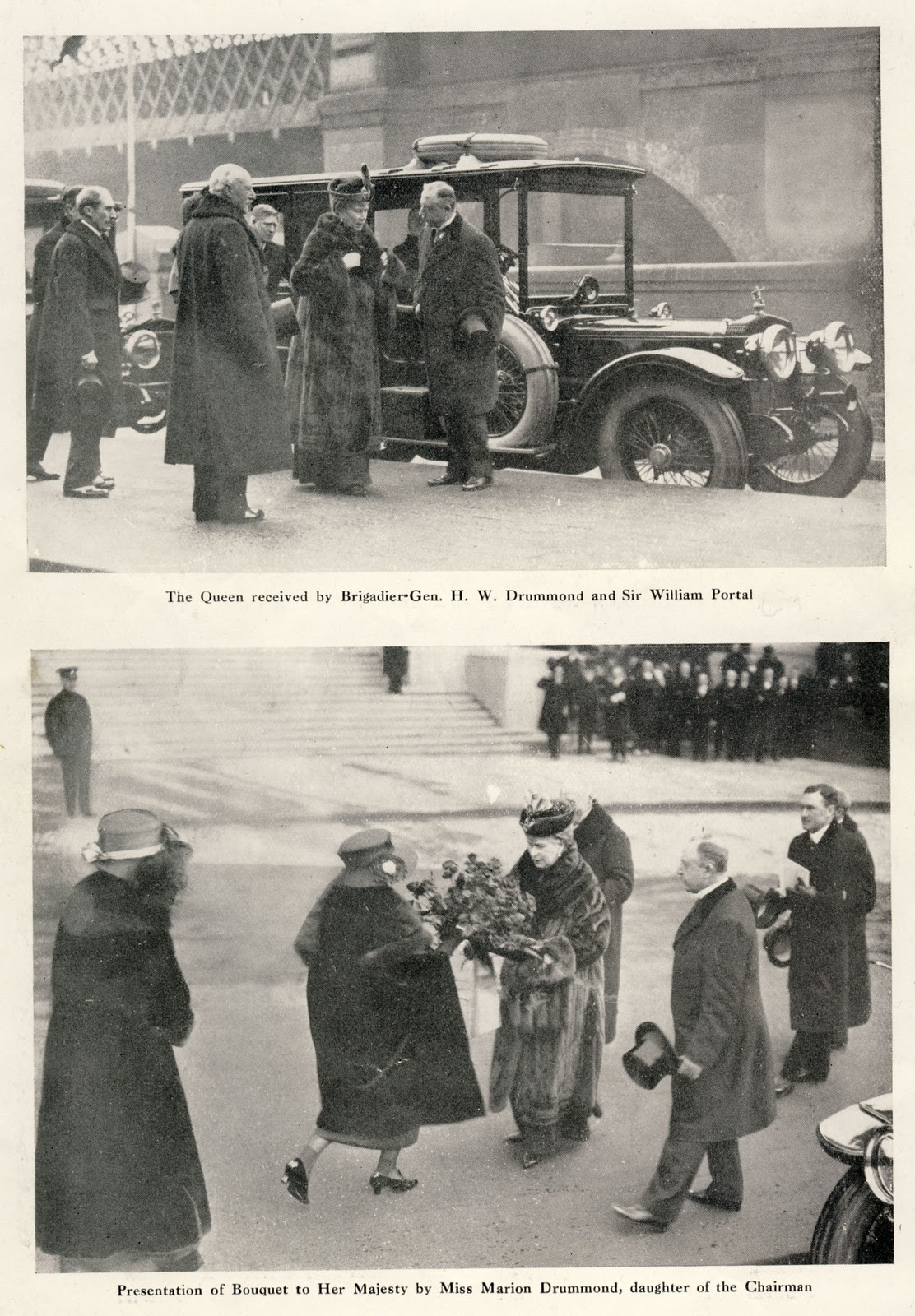
The rebuilt Waterloo station and Victory Arch were opened by Queen Mary on the 21st March 1922.

Waterloo Station 1922

Waterloo Station Opening 1922

Waterloo Station 1922

Waterloo Station 1922

Waterloo Station 1922


In 1923 the Railways were consolidated into four operating companies, the London and South Western Railway being absorbed into the Southern Railway.

In World War Two Waterloo Station would once again become a major centre for troop movements. It would be used for evacuation of evacuees and was bombed several times during the course of the war.

Waterloo Station World War Two
Soldiers and Evacuees


Waterloo Station at War

After the Second World War a memorial plaque commemorating the 626 men of the Southern Railway was added to the Victory Arch. 


Waterloo Station at Peace

In commemoration of the 50th anniversary of D-Day another plaque was added in memory of the Railway employees of the Southern Railway who lost their lives on 6th June 1944. 


Wednesday, 20 August 2014

Op Ducy - Merville Battery


The German MERVILLE BATTERY is located 2 miles SE of the port of OUISTREHAM covering the mouth of the RIVER ORNE. Crucially for the planed landings on D Day it was situated 5 miles East of SWORD QUEEN BEACH, and it was assessed that the battery could cause serious problems for the troops landing on the beach.

Merville Battery Threat


The battery consisted of 4 concrete casemates, the type used normally housing 150mm guns, and this was what concerned the D-Day planners, consequently it was deemed necessary that the battery be destroyed prior to the main beach landings.

The battery was heavily bombed by the RAf on 16th May 1944, but little damage was inflicted, though the Battery Commander was killed as he visited his mistress.

A ground assault was therefore planed.

The defences for the battery were formidable:
  • 20mm anti-aircraft guns
  • 15 machine gun positions
  • Wire obstacles in an area 640 by 460 m surrounded by two barbed wire obstacles 15 4.6 m thick by 1.5 m high.
  • 100 m deep  minefield
  • Anti-tank ditch covering any approach from the nearby coast.
  • Areas to the East of the battery were flooded as part of a wider defence plan
Merville Battery June 1944

 
As part of the overall plan to secure the left flank of the D-Day landings, 9th Battalion Parachute Regiment, supported by Royal Engineers in Horsa Gliders, was tasked with the destruction of the battery. The Pathfinders would drop just after midnight to secure and mark the dropping and air landing zones. Main body would arrive 13:00, and the operation needed to be complete by 05:00 when a naval bombardment from HMS Arethusa would commence. Prior to the ground assault, RAF Lancaster Bombers would bomb the battery.

The Pathfinders drop was successful, however, their radio beacons had been damaged, and the smoke and debris from the RAF bombing, which was off target, obscured th landing lights.

The main drop and air landings were scattered as the DZ / LZ were not marked. Only 150 men out of a battalion of 800 arrived at the assembly point. There were no engineers and no infantry support weapons (anti tank guns) or jeeps. 

A reconnaissance party had managed to reach the battery, mark 4 routes through the minefield  and  cut a route through the barbed wire.

Merville Battery Assault

The reduced battalion managed to penetrate into the Battery and neutralised the gun by throwing fragmentation and phosphorous grenades through the gun apertures.


Merville Battery Casemate

The German garrison resisted and only 75 paratroopers withdrew from the battery shortly before 05:00.

The guns were only neutralised. Two guns were in action later in the day, though it transpired that the guns were only 100mm aged Czech WW1 guns.

The battery would not be captured till 17th August 1944.


Merville Battery Plan


Merville Battery Dakota

Merville Battery

On guard

Op Ducy - Omaha Beach


D-Day OMAHA Beach  


Omaha Beach
 
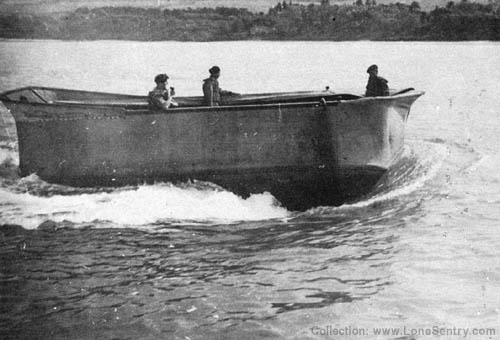
The operation to land on OMAHA Beach commenced 11 miles offshore as men transferred from their transport ships onto landing craft. Rough weather and darkness meant many of the assaulting troops were out of position, particularly the specialist engineers required to clear beach obstacles.

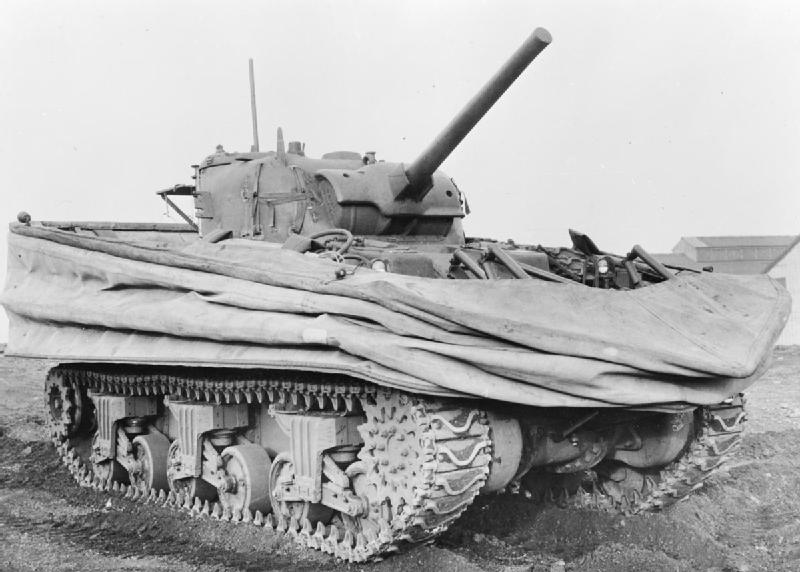
Six thousand yards from the beach DD Tanks (Double Duplex Tanks) capable of swimming to the beaches were launched.


In the heavy swell most sunk, only two made it to the breaches. The weather also caused the loss of many guns as well as troop carrying landing craft.

The infantry approaching OMAHA BEACH were therefore without specialist beech clearing engineers, no armoured support, and short on artillery. The 3 hour journey left many sea sick, and as they arrived at the beaches, difficulties in navigation due to smoke and mist obscuring landmarks, meant the majority of landing craft missed their intended locations. In most cases the landing craft found themselves on sandbars 50 to 100 yards short of the beach, and consequently had to wade through water, often up to neck height, before they could reach the beach.

Omaha Beach - Landing 6th June 1944

Defences on OMAHA were stronger than expected, the air and naval bombardment were ineffective, and therefore the Germans were able to bring the full weight of machine gun fire from interlocking positions on to the beaches as well as artillery and mortar fire.
The first wave were unable to move off the beach, and the problem was made worse by the arrival of the second wave. At 08:30 landings were suspended, the assaulting craft being required to circle off the beach. At 09:50, destroyers were ordered to get as close to the beach as possible to provide covering fire, some coming so close the bottom of the ship scraped the sea bottom.

Eventually small penetrations were made by impromptu assaults of groups scratched together from different units, aided by tank fire and naval gun fire support. This allowed two exits from the beaches to be formed. These were exploited to create a small bridgehead; however none of the original objectives were achieved.

Over 2,000 casualties were incurred establishing the beachhead.

Omaha Beach - 2014

Omaha Beach Memorial

Omaha Beach Memorial

 
-----------------