Albert lay just behind the British lines, dominated by the Basilica of Notre-Dame de Brebières, with it's Golden Virin on it;s spire. On the 15th January 1915, it was hit by shell fire. The Virgin was knocked horizontal and near falling, superstitions from all the opposing armies originated as to what would happen if it ever fell.
Thursday, 21 April 2011


Somme - 2011

On 1st July 1916 the Battles of the Somme commenced. It was planned to be a swift decisive battle to break the deadlock of nearly two years of trench warfare. In th end it turned out to be a series of battles of attrition, the objectives of the 1st July not being secured until November 1916.
CWGC The Battle of the Somme
BBC Battle of the Somme Animated Map
Imperial War Museum Battle of the Somme
The Battle of the Somme is epiomised by the images of the infantry going over the top and slaughered in no mans land.

What of the Royal Artillery............
Over 1,400 guns of all calibres were made available and 1.6 million shells. Expectations were high. It was envisaged that this amount of firepower would destroy the German defences, General Sir Henry Rawlinson informing his subordinates that "nothing could exist at the conclusion of the bombardment in the area covered by it".
 The plan for the Battle aimed at breaking through the German defensive positions, creating a gap, in order that the cavalry could penetrate deep into the German held territory. The attack was to be conducted on a broad front of 25,000 yards using 25 Divisions.
In preparation for the attack, a preliminary bombardment commenced 24th June 1916, targeting strong points, logistics, enemy artillery and conducting wire cutting.
The tasks for the guns and the overall timescale of 6 days were defined. Counter Battery fire tasks were laid down, pauses for aerial photography, and deception methods co-ordinated. The allocation to tasks, observers and deployments was delegated to the individual GOCRA’s at Corps HQ.
The preliminary bombardment was to commence on the 24th June 1916, designated U day, and would continue for 5 days till Y day, 29th June 1916. As a result of the poor weather and uncertainties about the effect of artillery fires, orders are issued at 11 am for a 48 hour delay, Z day would be 1st July 1916.The offensive on Z day would be supported by a barrage aimed at assisting the infantry to close on the German trenches. Tasks would include the cutting of wire, destroying strong points, counter battery fire and targets in depth.
Over 1,400 guns of all calibres were made available and 1.6 million shells. Expectations were high. It was envisaged that this amount of firepower would destroy the German defences, General Sir Henry Rawlinson informing his subordinates that "nothing could exist at the conclusion of the bombardment in the area covered by it".
 The plan for the Battle aimed at breaking through the German defensive positions, creating a gap, in order that the cavalry could penetrate deep into the German held territory. The attack was to be conducted on a broad front of 25,000 yards using 25 Divisions.
In preparation for the attack, a preliminary bombardment commenced 24th June 1916, targeting strong points, logistics, enemy artillery and conducting wire cutting.
The tasks for the guns and the overall timescale of 6 days were defined. Counter Battery fire tasks were laid down, pauses for aerial photography, and deception methods co-ordinated. The allocation to tasks, observers and deployments was delegated to the individual GOCRA’s at Corps HQ.
The preliminary bombardment was to commence on the 24th June 1916, designated U day, and would continue for 5 days till Y day, 29th June 1916. As a result of the poor weather and uncertainties about the effect of artillery fires, orders are issued at 11 am for a 48 hour delay, Z day would be 1st July 1916.The offensive on Z day would be supported by a barrage aimed at assisting the infantry to close on the German trenches. Tasks would include the cutting of wire, destroying strong points, counter battery fire and targets in depth.


View NVAA Somme Tour 2011 in a larger map
------------------------------------------------------------------------


Monday, 3 January 2011
Durham January 2011
In the 18th Century every county in England had it's own Militia which provided home defence and could be mobilised to defend towns and coastal forts. Men would undertake training for sevveral months at an Army depot, then return to civilian life where they were required to report regulary for training, and a two week camp. They would receive military pay and a small retainer.
The Durham Militia was formed in 1759 by the Earl of Darlington at Barnard Castle. In 1853, the Durham Militia was split into three new Regiments - 1st South Durham Militia, 2nd North Durham Militia the Durham Militia Artillery.
The Durham Militia Artillery were based in Durham City at Vane Tempest Hall. Subsequently the 3rd Northumbrian Brigrade Royal Field Artillery occupied the Hall.

It was from here the soldiers of the 3rd Northumbrian Field Artillery (Durham Battery) began their journey here, marching down Gilesgate and Claypath to the Market Place, before leaving for France.
3rd Northumbrian Briagde RFA Durham Battery
The Hall has had a chequered history dating back to the 1860s. As well as being home for a a number of Army units and even doubled as a smallpox hospital in 1884. The parade grounds are said to be haunted by a militia soldier who accidentally blew himself up by a cannon while shooting it on the parade grounds.


The Durham Militia was formed in 1759 by the Earl of Darlington at Barnard Castle. In 1853, the Durham Militia was split into three new Regiments - 1st South Durham Militia, 2nd North Durham Militia the Durham Militia Artillery.
The Durham Militia Artillery were based in Durham City at Vane Tempest Hall. Subsequently the 3rd Northumbrian Brigrade Royal Field Artillery occupied the Hall.

Durham Militia Artillery
Vane Tempest Hall 1875

Vane Tempest Hall 2011
It was from here the soldiers of the 3rd Northumbrian Field Artillery (Durham Battery) began their journey here, marching down Gilesgate and Claypath to the Market Place, before leaving for France.

Gilesgate and Claypath
Durham Market Place3rd Northumbrian Briagde RFA Durham Battery
The Hall has had a chequered history dating back to the 1860s. As well as being home for a a number of Army units and even doubled as a smallpox hospital in 1884. The parade grounds are said to be haunted by a militia soldier who accidentally blew himself up by a cannon while shooting it on the parade grounds.


A number of para normal sightings have been made:
Saturday, 25 December 2010

Friday, 24 December 2010
HMS Ark Royal farewell to the Tyne


HMS Ark Royal's final visit to the Tyne - News - Videos & Photos - ChronicleLive
It is the fifth vessel to bear the proud name. Ark Royal was built by Swan Hunters Ship Builders' yard at Wallsend in December 1978 and launched by Her Majesty Queen Elizabeth the Queen Mother. HMS Ark Royal was accepted into service on 1 July 1985 and finally Commissioned, again by Her Majesty Queen Elizabeth the Queen Mother on 1 November 1985.
HMS Ark Royal is.4 metres (693 feet) long, has a maximum beam of 35 metres (114.7 feet) and a displacement of 20,235 tonnes. She is powered by 4 Olympus gas turbine engines (like Concorde's), which give a maximum speed in excess of 30 knots. A steeper ski jump than in the other ships of this class is fitted at the forward end of the flight deck.
HMS Ark Royal


The Royal Navy's last aircraft on a carrier until 2020 !
Ex Iron Storm Otterburn
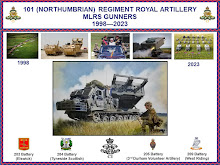
The NVAA deployed to Otterburn to visit 101 Regiment on Exercise Iron Storm.

The Regiment's two strike Batteries (203 & 205) equipped with MLRS, and the STA Batteries (204 & 269) with thier target acquisition equipment were on exercise Iron Storm in support of the 3rd UK Divisions Artillery Group.
3rd UK Division
On arrival the Commanding Officer welcomed the Old and Bold, before handing over to the Adjutant for the obligatory health and safety briefing. The NVAA were eloquently informed to be careful as "Otterburn had undulating ground” - a fact many Gunners over the years may have noticed!


The Surveillance and Target Acquisition equipment includes radars and sound ranging equipment able to track and locate anything from heavy artillery to mortars. The STA Batteries support 5th Regiment Royal Artillery on operations


Redesdale Arms Left 3 O clock

Retiring to the First and Last (Redesdale Arms, Northumberland) time to reflect that it was “never like that in my day”.

The Regiment's two strike Batteries (203 & 205) equipped with MLRS, and the STA Batteries (204 & 269) with thier target acquisition equipment were on exercise Iron Storm in support of the 3rd UK Divisions Artillery Group.
3rd UK Division
On arrival the Commanding Officer welcomed the Old and Bold, before handing over to the Adjutant for the obligatory health and safety briefing. The NVAA were eloquently informed to be careful as "Otterburn had undulating ground” - a fact many Gunners over the years may have noticed!

Otterburn's undulating ground

The Regiments MLRS are capable of firing to a range of 32 Km (20 miles), each of the 12 rockets carrying 644 sub munitions. They are the only unit in the Territorial Army equipped with MLRS and support 39 Regiment Royal Artillery on operations.


The Regiments MLRS are capable of firing to a range of 32 Km (20 miles), each of the 12 rockets carrying 644 sub munitions. They are the only unit in the Territorial Army equipped with MLRS and support 39 Regiment Royal Artillery on operations.


The Surveillance and Target Acquisition equipment includes radars and sound ranging equipment able to track and locate anything from heavy artillery to mortars. The STA Batteries support 5th Regiment Royal Artillery on operations


Redesdale Arms Left 3 O clock

Retiring to the First and Last (Redesdale Arms, Northumberland) time to reflect that it was “never like that in my day”.


Subscribe to:
Posts (Atom)