Friday, 12 July 2024

National Memorial Arboretum 2024 - GPO Memorial Garden

 The GPO Memorial Garden is dedicated to the thousands of people of the General Post Office who died, were wounded or suffered whilst maintaining postal services throughout the two World Wars. The post office service provided the vital communication between those serving and the families and friends at home.

GPO Memorial

GPO Memorial Garden

GPO Memorial Garden IJ

Post Office workers were vital to the war effort providing messenger services, telegraphic and wireless communications. Many post office workers joined up and were involved in communications. 

Post Office World War One

Post Office World War Two

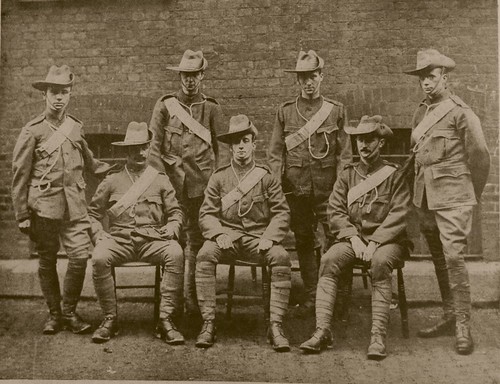
In 1881, Post Office employees formed a Volunteer Rifle Company which was expanded to become a battalion in 1868. Volunteers from that unit served during the Boer War in South Africa.

Post Office Rifles Volunteers Boer War

 In 1908 the unit became the 8th (City of London) Battalion, London Regiment (Post Office Rifles) on the formation of the Territorial Force. The Battalion, 1/8th, and its duplicate, 2/8th  would serve  on the Western Front and awarded 17 battle honours. 

8th (City of London) Battalion London Regiment
 (Post Office Rifles) 


National Memorial Arboretum 2024 - Durham Light Infantry

 The Durham Light Infantry memorial features a larger-than-life bronze statue of a DLI bugler symbolising  the moment of the ceasefire in Korea in 1953. It was unveiled in July 2012 together with a twin memorial in front of the Town Hall in the city of Durham. 

Durham Light Infantry Memorial

The Durham Light Infantry (DLI) was formed in 1881 with the amalgamation of the 68th (Durham) Regiment of Foot (Light Infantry) and the 106th Regiment of Foot (Bombay Light Infantry). 

During the First World War the 22 Battalions of the DLI saw active service on the Western Front (at Ypres, Loos, Arras, Messines, Cambrai, the Somme and Passchendaele), in Italy, Egypt, Salonika and India. They were awarded 29 battle honours and won six Victoria Crosses. The Commonwealth War Graves Commission records 13,290 DLI  officers and men lost during the conflict. 

In the Second World War 10 DLI battalions saw active service overseas in France, Burma, North Africa, Italy, and France and Germany. In May 1940 in Belgium, Richard Annand of the 2nd Battalion DLI became the first soldier of the Second World War to win the Victoria Cross. Another would be awarded to Adam Wakenshaw for his actions at Mersa Matruh, Egypt, in June 1942. The Commonwealth War Graves Commission records 3,094 DLI  officers and men lost during the conflict. 

Those losses included Private Matthew Stephenson, 8th Battalion DLI,  who was lost as a POW when the SS Scillin was torpedoed in November 1942. 

Field Marshall Montgomery wrote of the Durham Light Infantry;

Of all the infantry regiments in the British Army, the DLI was one most closely associated with myself during the war. The DLI Brigade [151st Brigade] fought under my command from Alameim to Germany ...It is a magnificent regiment. Steady as a rock in battle and absolutely reliable on all occasions. The fighting men of Durham are splendid soldiers; they excel in the hard-fought battle and they always stick it out to the end; they have gained their objectives and held their positions even when all their officers have been killed and condition were almost unendurable.

The The Durham Light Infantry memorial bears an inscription of a quote by Montgomery of Alamein;

There maybe some Regiments as good but I know of none better.

Durham Light Infantry Memorial
Montgomery Inscription

Durham Light Infantry Memorial
WW1 and WW2 Battle Honours


The DLI would see active service in Korea in 1952-1953. Twenty-four soldiers were killed or died of wounds and three men were missing, presumed killed in action, as their bodies were never found. 

The Durham Light Infantry were on active service in 1958 during the Cyprus Emergency and from 1965 to 1966 in Borneo. On 26 February 1966 the D.L.I. suffered its last combat fatality when Private Thomas Griffiths was killed. 

In 1968 the Durham Light Infantry amalgamated with three other country light infantry regiments to form the Light Infantry. 

Durham Light Infantry Memorial IJ


National Memorial Arboretum 2024 - British Army Memorials


Royal Tank Regiment

Royal Tank Regiment

Royal Signals

Guards Airborne

Devon and Dorset Regiment

Airborne Forces

Army Commandos

Royal Army Medical Corps

Royal Electrical and Mechanical Engineers

Royal Army Veterinary Corps

National Memorial Arboretum 2024 - Millennium Chapel

 The millennium chapel is the focus for the spiritual aspect of Remembrance at the National Memorial Arboretum. It is the one place in the United Kingdom where the Two Minute Silence is remembered every day. It is signalled by a recording of buglers of the Royal Marines playing last post and reveille. 

National Arboretum Millennium Chapel

Millennium Chapel

Millennium Chapel Altar

Millennium Chapel Standards

Millennium Chapel Cross

Millennium Chapel - The Story Teller


National Memorial Arboretum 2024

 The United Kingdom National Arboretum is situated in Staffordshire aims to provide a place where people can reflect, celebrate lives lived and commemorate lives lost in service.


The Arboretum site covers 150 acres of woodland and gardens planted on reclaimed land. 
There around  400 memorials that acknowledge the personal sacrifices made by the Armed Forces, emergency services and civilian organisations of the UK. 


The Arboretum is part of the Royal British Legion who are responsible for its maintenance and operation.

Royal British Legion Poppy Memorial

The largest memorial at the Arboretum is the Armed Forces Memorial which commemorates the 16,000 personnel who have lost their lives on active service since the Second World War. 

Armed Forces Memorial

Armed Forces Memorial

The Arboretum's memorials include civilian organisations involved in conflict. One of memorials is dedicated to the Scouts which provided messenger services, guarded key points and helped in a myriad of tasks during both World Wars,.

Boy Scout messenger World War One

Scouting Memorial

Scouting Memorial


The Arboretum's first memorial was the Polar Bear Association Memorial which was dedicated in June 1998. The Polar Bears were the 49th (West Riding) Division who were stationed in Iceland from 1941 to 1943. They deployed to Normandy in 1944 and involved in the North West Europe Campaign. It's order of battle included 70 Infantry Brigade which consisted of the 10th and 11th Battalions Durham Light Infantry and 1st Battalion Tyneside Scottish (Black Watch).

Polar Bear Memorial IJ

Polar Bear Memorial


One of the most recent commemorations is a road named after Captain Sir Tom Moore who  raised nearly £33 million  for charity in the run-up to his 100th birthday during the COVID-19 pandemic. He served in India and the Burma campaign during the Second World War, and later became an instructor in armoured warfare. 


Captain Sir Tom Moore

The Arboretum is bounded on the East by the River Tame. The grounds contain over 50,000 trees as well as many varieties of fauna. 

National Arboretum River Tame


National Arboretum Forest


Wednesday, 10 July 2024

Blyth - HMS Onslaught

Blyth Community Hospital HMS Onslaught Nameplate IJ

 Blyth has a long association with the Royal Navy Submarine Service.

During the First World War it was the home port of the 11th Submarine Flotilla and submarine depot ship HMS Titania. In the Second World War the submarine base was named HMS Elfin.

On visit to Blyth in 1979 in Oberon Class submarine HMS ONSLAUGHT was given the Freedom of the Borough.

HMS Onslaught at Blyth
28 September 1979


When HMS Onslaught was paid off in 1990 her conning tower nameplate and badge were presented to Blyth Council for display in the Community Hospital. 

HMS Onslaught

Blyth Community Hospital HMS Onslaught Nameplate

Blyth War Memorials

Blyth War Memorials are located on the edge of Ridley Park in Blyth.

Blyth War Memorials


The Boer War Memorial which was was originally located at the junction of Bridge Street and Freehold Street was unveiled on 22 July 1903 by Lord Ridley.  The monument was moved to Ridley Park in 1950.

Blyth Boer War Memorial


The First World War Memorial was erected outside the Knight Memorial Hospital on Beaconsfield Street.  The Cenotaph was unveiled on 17 November 1923 by the Duke of Northumberland in commemoration of 637 servicemen from Blyth, (including New Delaval, Newsham, Bebside and Cowpen). The memorial was moved to its location in Ridley Park in 1950.

Blyth WW1 Cenotaph


The World War Two Memorial was placed in Ridley Park in 1950 and refurbished in 2018.

Blyth WW2 Memorial


Blyth WW1 and WW2 Additional Names memorial was unveiled in 2018 together with a memorial recording those lost in conflicts since 1945. 

Blyth WW1 and WW2 Additional Names Memorial

Blyth Other Conflicts Memorial

=====0=====

River Blyth

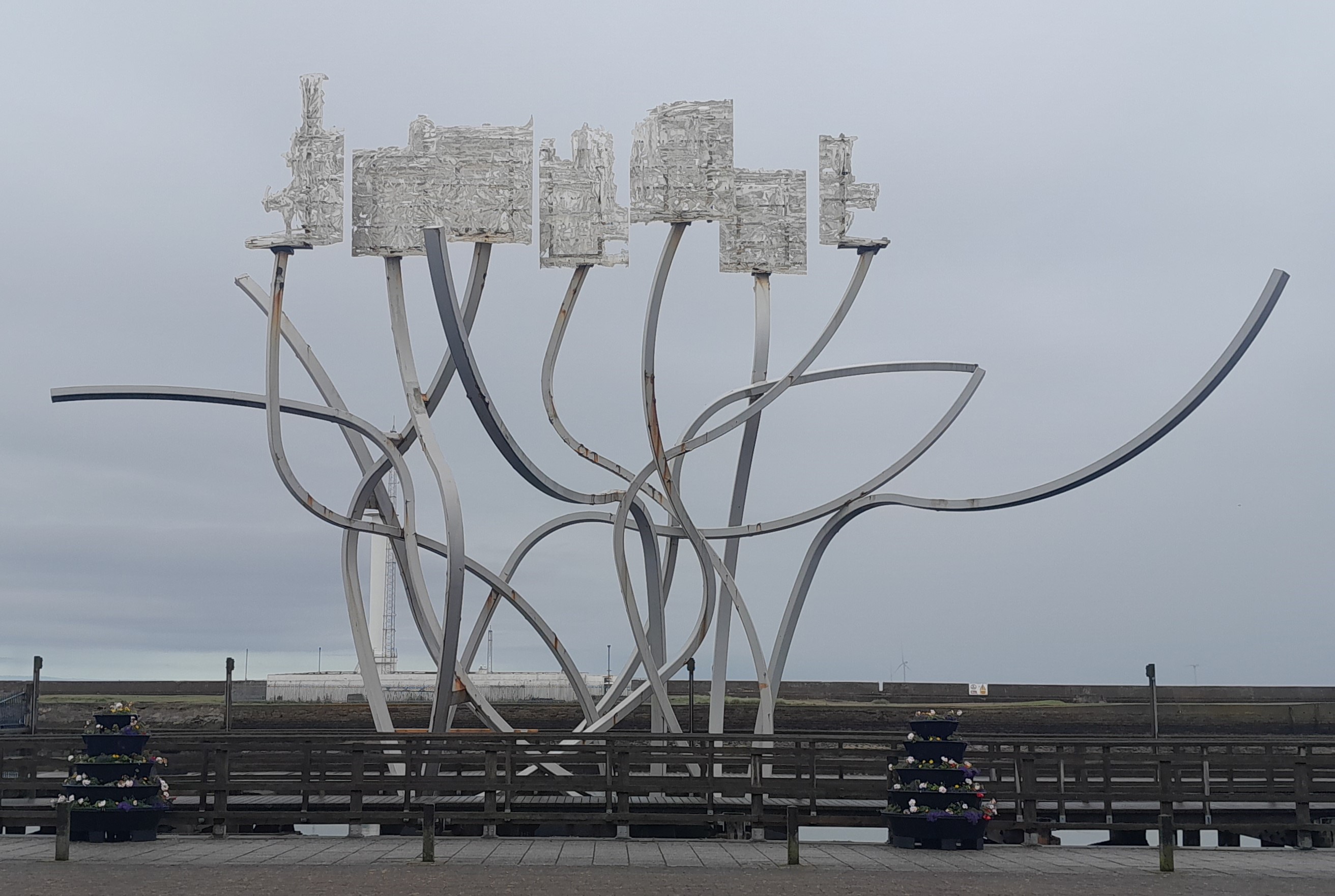
Blyth 'Spirit of the Staithes' Memorial