Blog Search


Wednesday, 2 November 2022

Edinburgh - North British Railway War Memorial

The North British Railway (NBR) was incorporated in 1844 to build a railway between Edinburgh and Berwick. The line was opened in June 1846. In 1850, the Royal Border Bridge across the River Tweed was opened creating a continuous route from London to Edinburgh, the East Coast Main Line (ECML).

Royal Border Bridge 1850

The North British Railway expanded through acquisition and amalgamations to become the largest railway in Scotland by the mid 1860's. The NBR developed main line routes to Carlisle, Glasgow, Perth, Stirling, Fort William and Mallaig. 

North British Railway Express Train

It created suburban services around Edinburgh and Glasgow, and branch lines in central Scotland, Fife, the Borders and Northumberland. 

North British Railway Train

Lines serviced the coalfields of Lanarkshire, Lothian, and Fife, iron and steel industries in central Scotland, as well as fishing ports along the east and west coasts, giving the NBR extensive goods operations.

North British Railway Goods Train

On the eve of World War One the North British Railway ran along the North Sea from Berwick to Aberdeen; with its trunk lines radiating from Edinburgh to Carlisle, Perth, Stirling, Glasgow, Fort Wilham and Mallaig. Through its association with the Highland Railway at Perth, its partnership with the Great Northern and the North-Eastern in the East Coast Route between London and Scotland, and its co-operation with the Midland in respect to the Waverley Route, via Carlisle, Galashiels and Edinburgh, the NBR was an important link in the British rail network. 


North British Hotel and Waverley Station Edinburgh

Northern Express crosses Forth Rail Bridge

The North British Railway's network assumed prominence during the war as a major line of communication. It transported troops to defensive positions along the Scottish East Coast. It linked military depots and training centres. Naval traffic serviced the naval base at Rosyth and passed along the NBR routes north to Inverness and Thurso for Scapa Flow. 

Forth Bridge 1914

The threat of invasion on the East Coast of Scotland and the importance of the railways of the North British led to the stationing of one of two armoured trains in the Britain being stationed in Edinburgh. The trains could speed to an invasion site and deploy infantry supported with artillery from two-gun carriages at either end of the train, to slow down the invaders until further support arrived.

Armoured Train


On the outbreak of the First World War the North British Railway employed 24,625 people, of which 4,836 would join the Armed Forces. 

The North British Railway War Memorial in Edinburgh Waverley Station records the names of 775 railway workers who lost their lives during the Great War. The memorial panels record their occupations on the railway.

The memorial was unveiled on the 12th March 1922 by the Duke of Buccleuch.

-----o-----

Edinburgh Waverley Station

Edinburgh Waverley Station
North British Railway Memorial

Edinburgh Waverley Station
North British Railway Memorial

Edinburgh Waverley Station
North British Railway Memorial

A memorial plaque was added after the Second World War in remembrance of all railwaymen lost between 1939 and 1945.

Edinburgh Waverley Station
Railwaymen 1939-45 Memorial Plaque

Edinburgh Waverley Station
Memorial Bench


Edinburgh - American Civil War Memorial

 Located inside Edinburgh's Old Carlton Cemetery is the only American Civil War Memorial outside of the United States.

Edinburgh Old Carlton Cemetery
American Civil War Memorial
 

The conflict lasted from April 1861 to May 1865, which pitted the northern states of the Union, against the Confederate southern states. The central cause of war was the legitimacy of slavery where the north favoured emancipation. 

The American Civil War Memorial in Edinburgh was erected in 1893 in tribute to Scotsmen who in the Union Army fought during the conflict. 

Edinburgh American Civil War Memorial 

It depicts a figure of Abraham Lincoln, a shield featuring the American Flag and a freed slave with two furled Regimental flags.

The memorial records the names of six Scotsmen who signed up to join the Union Army: Sergeant Major John McEwan, Lt Col William Duff, Robert Steedman, James Wilkie, Alexander Smith and Robert Ferguson.


Tuesday, 1 November 2022

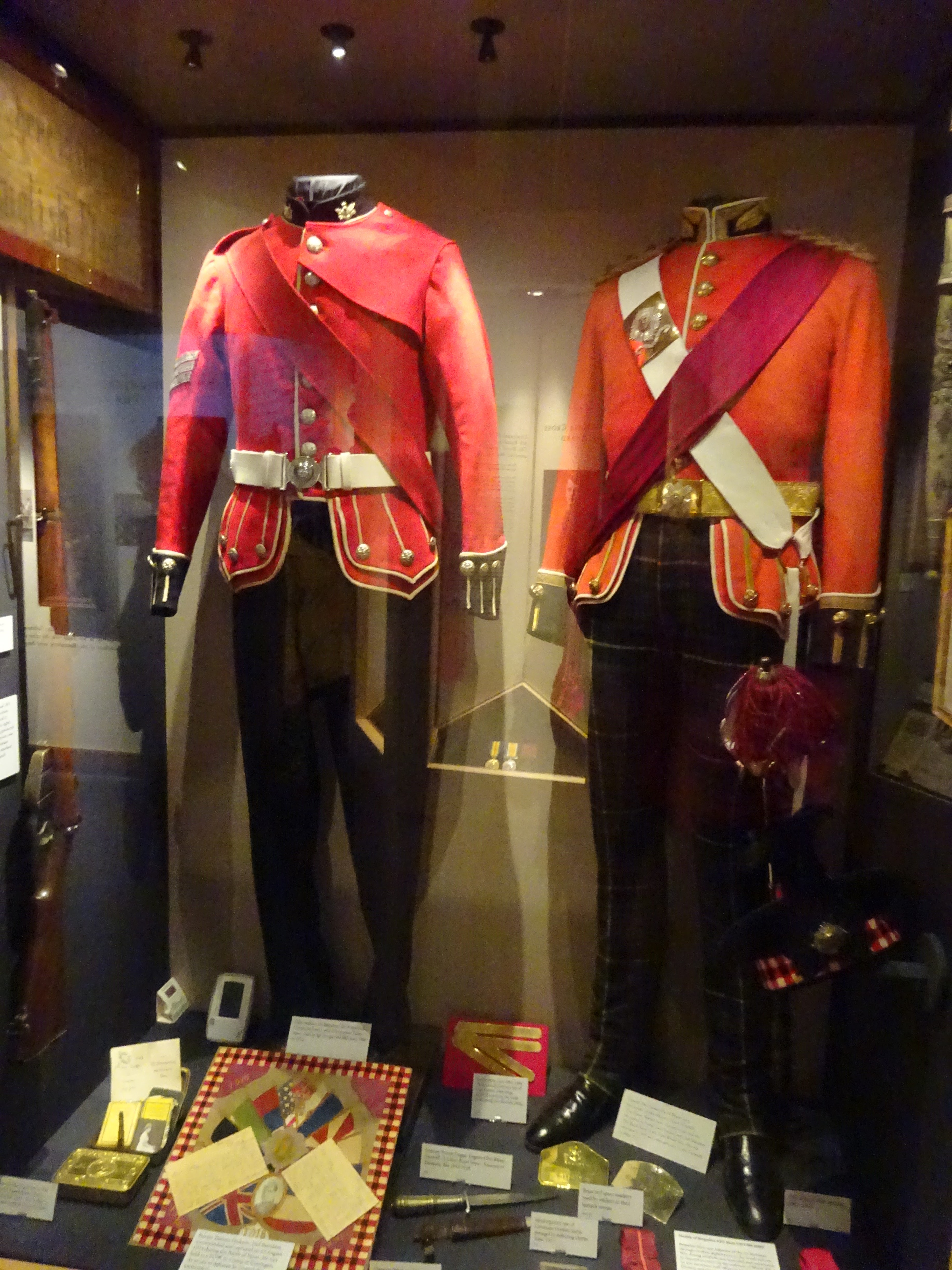
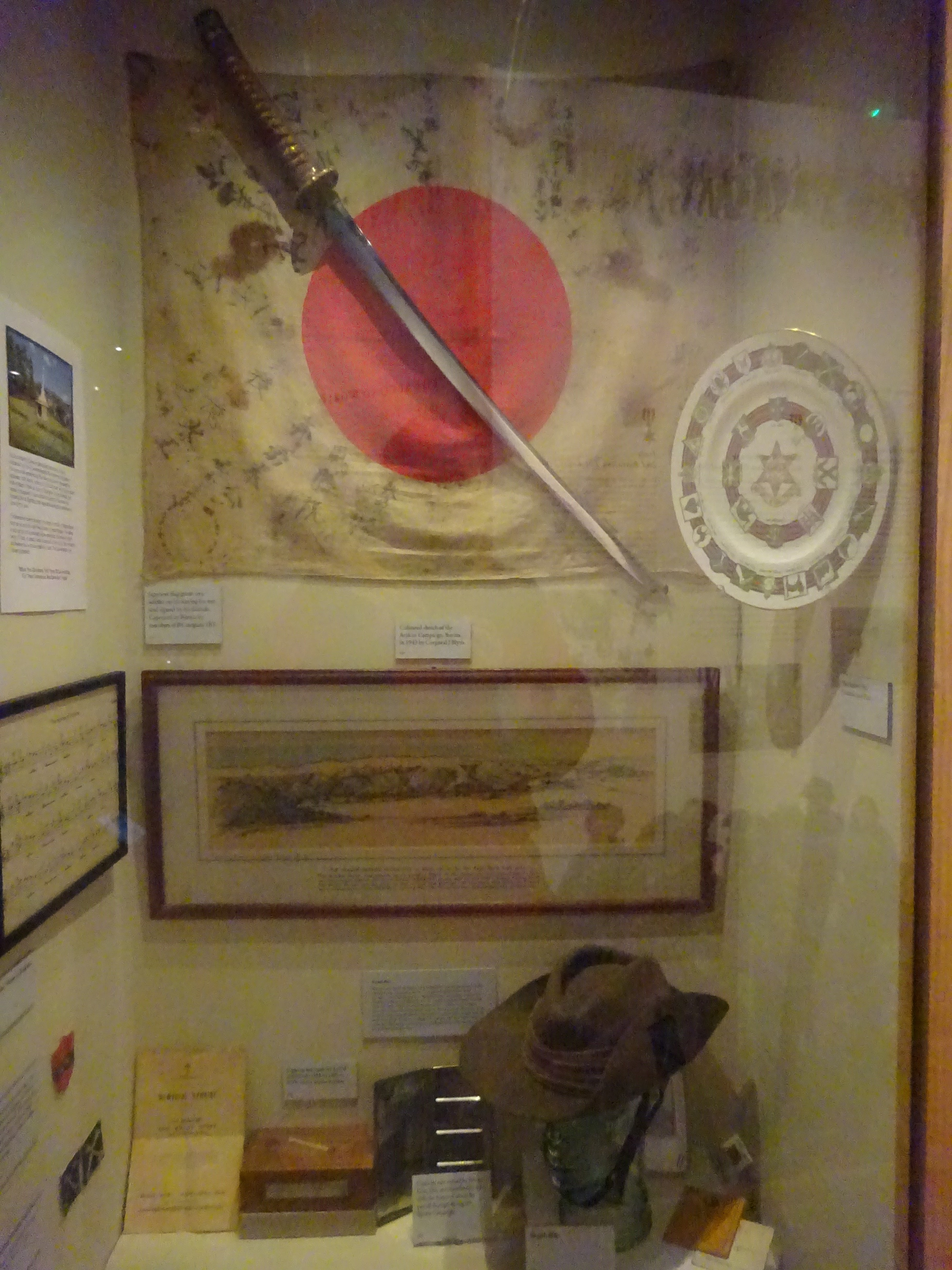
Edinburgh - Royal Scots Museum

Royal Scots Museum Edinburgh Castle

The Royal Scots were raised in 1633 during the reign of Charles I of Scotland. It was the oldest, and most senior Regiment in the British Army. 

It remained as one of the few Regiments not to be amalgamated until 2006 when the Royal Regiment of Scotland was formed. Together with the Kings Own Scottish Borderers, the Royal Scots formed a new battalion, the Royal Scots Borderers, 1st Battalion Royal Regiment of Scotland.

17th / 18th Century

Battle of Battle of Malplaquet 1709

Battle of Waterloo 1815

19th Century

World War One

World War One

World War Two - BEF France 1940

World War Two - Far East 1943-45

Northern Ireland 1970's

Operation Desert Storm 1990

2000's 

Royal Regiment of Scotland 2006
..
Royal Regiment of Scotland

------O------

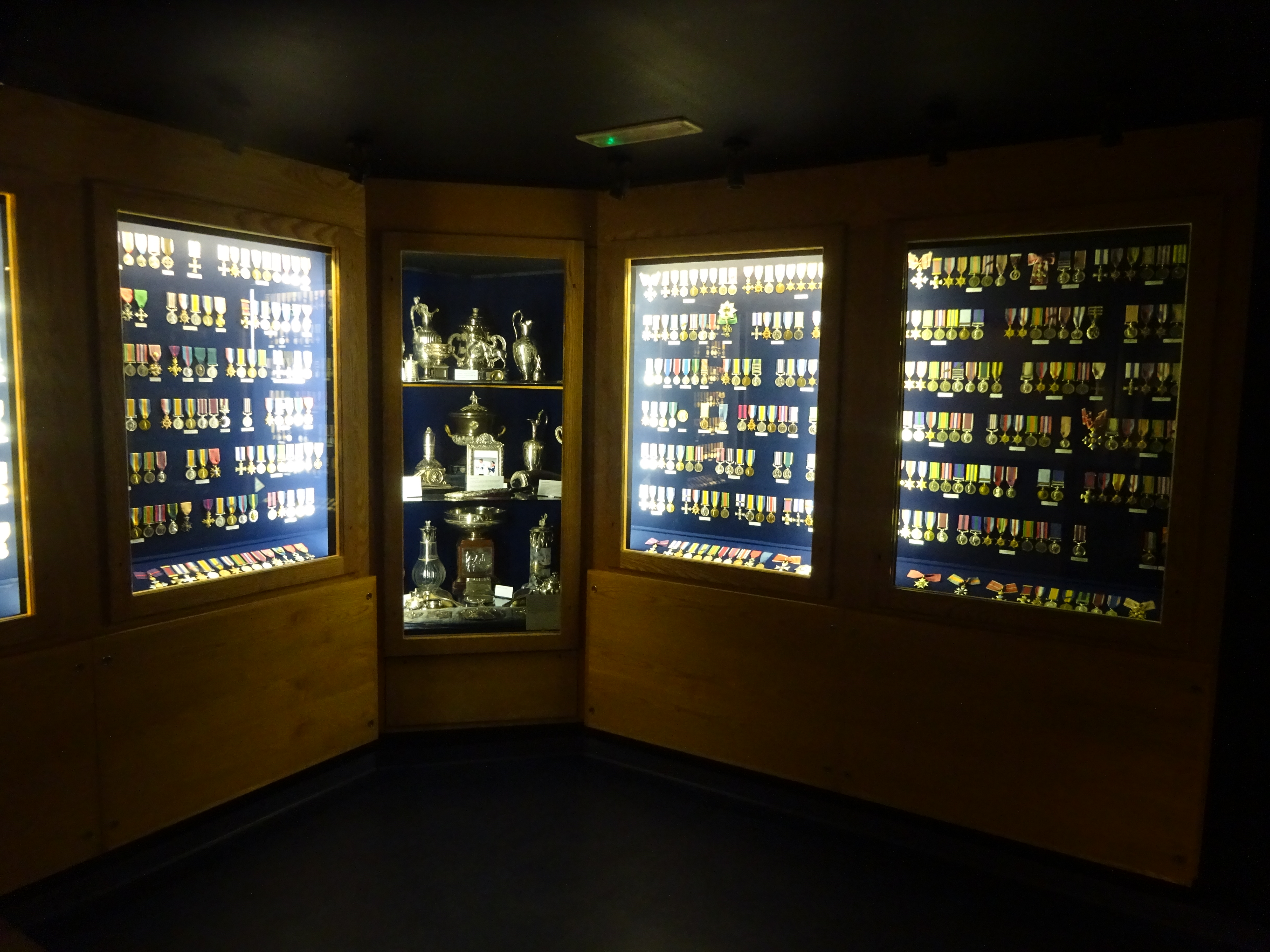
Royal Scots Museum Medal Room

Royal Scots Museum Drum Major


Monday, 31 October 2022

Edinburgh - Ensign Ewart

 Ensign Charles Ewart was a soldier in the Scots Greys (Royal North British Dragoons) who captured the regimental eagle of the French 45e Regiment de Ligne at the Battle of Waterloo in 1815.

Ensign Charles Ewart

He enlisted into the Royal North British Dragoons in 1789, aged 20. He fought during the French Revolutionary Wars rising to the rank of Sergeant. 

On the 18th of June 1815, the Scots Greys were part of the Union Brigade, heavy cavalry part of General Picton's 5th Division, held in reserve behind a ridge. 

The 5th Division was committed to move forward to the crest of the hill to cover the withdrawal of Belgians. Whilst the infantry held firm, the cavalry passed through the ranks and the Union Brigade charged the French infantry. 


Scots Greys charge at Waterloo

The Scots Greys broke through the centre of the French 45th Regiment of the Line, breaking them up as an effective fighting unit. During the fighting, Sergeant Ewart engaging in close combat, captured the 45th's regimental eagle. 

Sergeant Ewart captures French 45th Eagle

To prevent recapture, he was ordered to take to safety.

Sergeant Ewart returns with the French 45th Eagle

The Eagle became the cap badge of the Scot's Greys, and is worn today be the successor Regiment, the Royal Scots Dragoon Guards. 

Charles Ewart was given a commission as an ensign (second lieutenant) in the 5th Veteran Battalion in 1816, leaving the Army in 1821 when the unit was disbanded. 

After the Army he lived in Manchester, dying in 1846, where he was buried. His grave was forgotten; however it was rediscovered in the 1930's and in 1938 he was reburied on the esplanade of Edinburgh Castle in 1938.

Ensign Ewart grave

The Regimental Eagle and Standard of the 45e Regiment de Ligne is located in the Royal Scots Dragoon Guards Museum.

Scots Dragoon Guards Museum
Ensign Ewart
Cravat Eagle Standard 
45e Regiment de Ligne

Scots Dragoon Guards Museum
45e Regiment de Ligne Eagle

Scots Dragoon Guards Museum
45e Regiment de Ligne Eagle

A pub named after Ensign Ewart is located just of the Esplanade on the Royal Mile.

Ensign Ewart Royal Mile

Ensign Ewart Royal Mile

Ensign Ewart Royal Mile
Charge of the Scots Greys

Ensign Ewart Royal Mile
45e Regiment de Ligne Eagle

Ensign Ewart Royal Mile VM

Edinburgh - Scottish Horse Boer War Memorial

On the North side of the Esplanade in front of Edinburgh Castle is a memorial to the soldiers of the Scottish Horse who lost their lives during the Boer War. It records the names 14 officers and 123 men who were killed.

Esplanade Edinburgh Castle
Scottish Horse Boer War Memorial

 In November 1900, Lord Kitchener authorised the raising of Regiment of Scotsmen in South Africa to support the British Army fighting the Boers. The Scotish Horse Regiment of three squadrons became operational on 4th February. Recruiting continued and the Regiment became six squadrons strong.

Recruiting was extended beyond South Africa with Volunteers from the United Kingdom and Australia making their way to South Africa. A second Regiment of five squadrons was formed. 

Scottish Horse South Africa

Scottish Horse South Africa

The Scottish Horse engaged in a guerrilla campaign launching raids on the Boers and destroying their farms. 

Scottish Horse attack at Rooiwal

Scottish Horse
Boer War Medal

During the Campaign Lieutenant William John English of the 2nd Scottish Horse was awarded the Victoria Cross for his actions at Vlakfontein.

His citation read;

This officer, with five men, was holding the position at Vlakfontein on 3 July 1901 during an attack by the Boers. Two of his men were killed and two wounded, but the position was still held, largely owing to the lieutenant's personal pluck. When the ammunition ran short, he went over to the next party and obtained more; to do so he had to cross some 15 yards of open ground, under a heavy fire at a range of from 20 to 30 yards


Lieutenant W.J. English VC
2nd Scottish Horse


The Scottish Horse was disbanded at Edinburgh Castle on 1 September 1902, after repatriating Australians and discharging South Africans.