Blog Search


Friday, 29 April 2022

National Army Museum


National Army Museum IJ

Challenger Tank

Ferret

Lynx

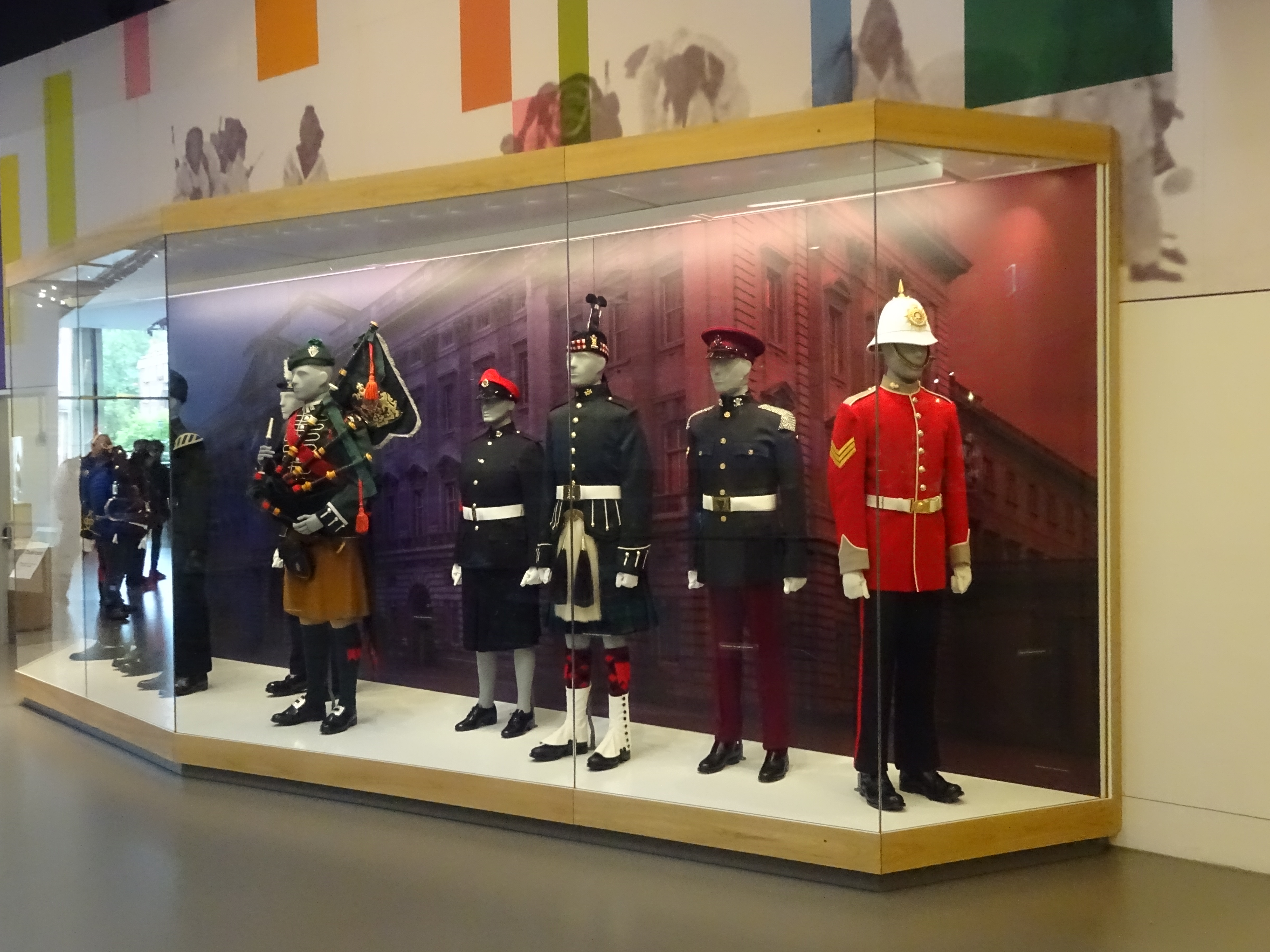
Modern Dress Uniforms

1460s-  English Civil War Pikeman

1740-1780 - Redcoat

1780-1815 - Drummer

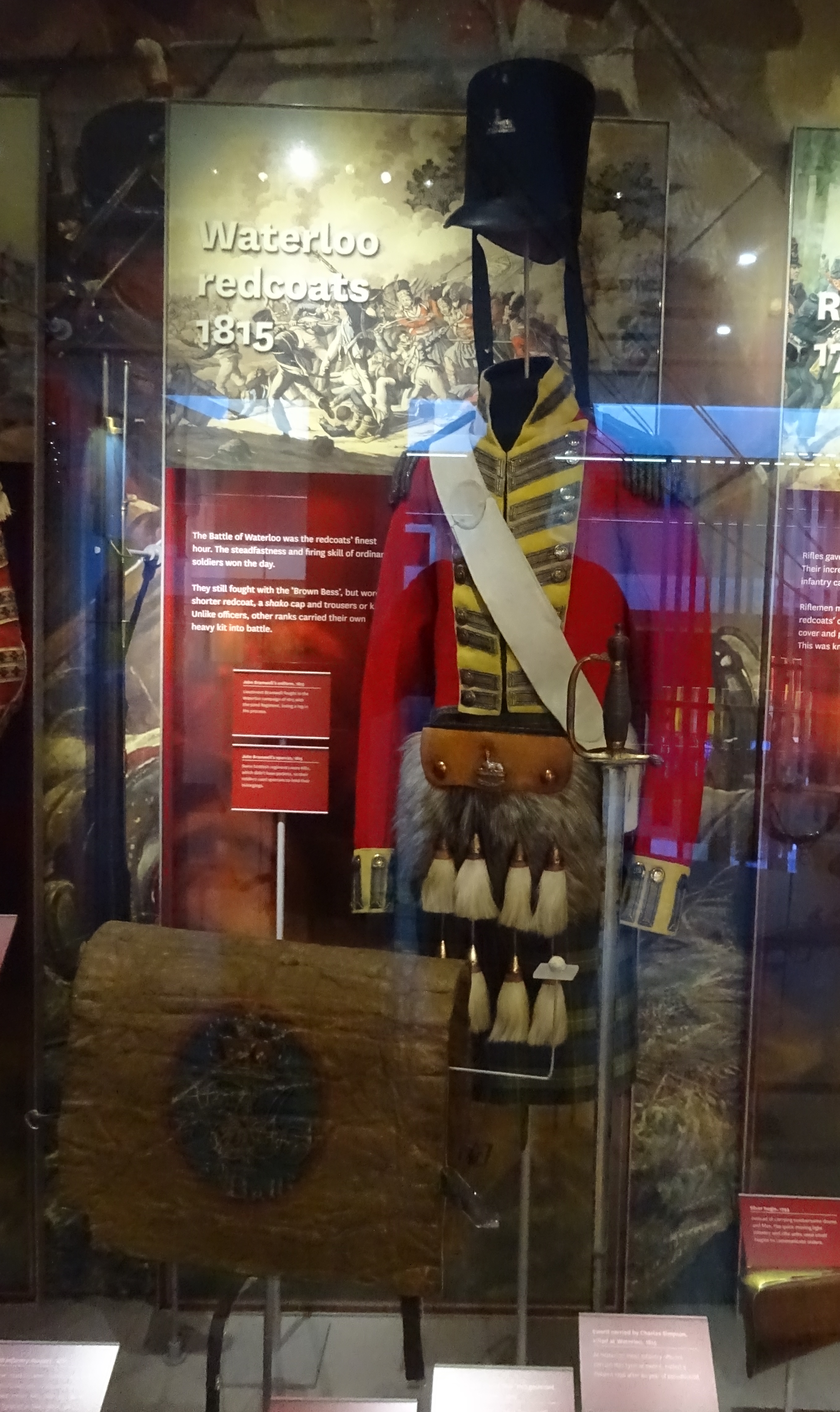
1815 - Waterloo

1815 - Battle of Waterloo

1854 - Crimea

1880s - Redcoat

20th Century Weaponary

1914-18 - WW1
Middlesex Regiment

1939-45 WW2
Sherwood Ranger


1939-45 Bren Gun Carrier

1970s - Northern Ireland Humber 'Pig'

1980s - Cold War

2003 - Iraq

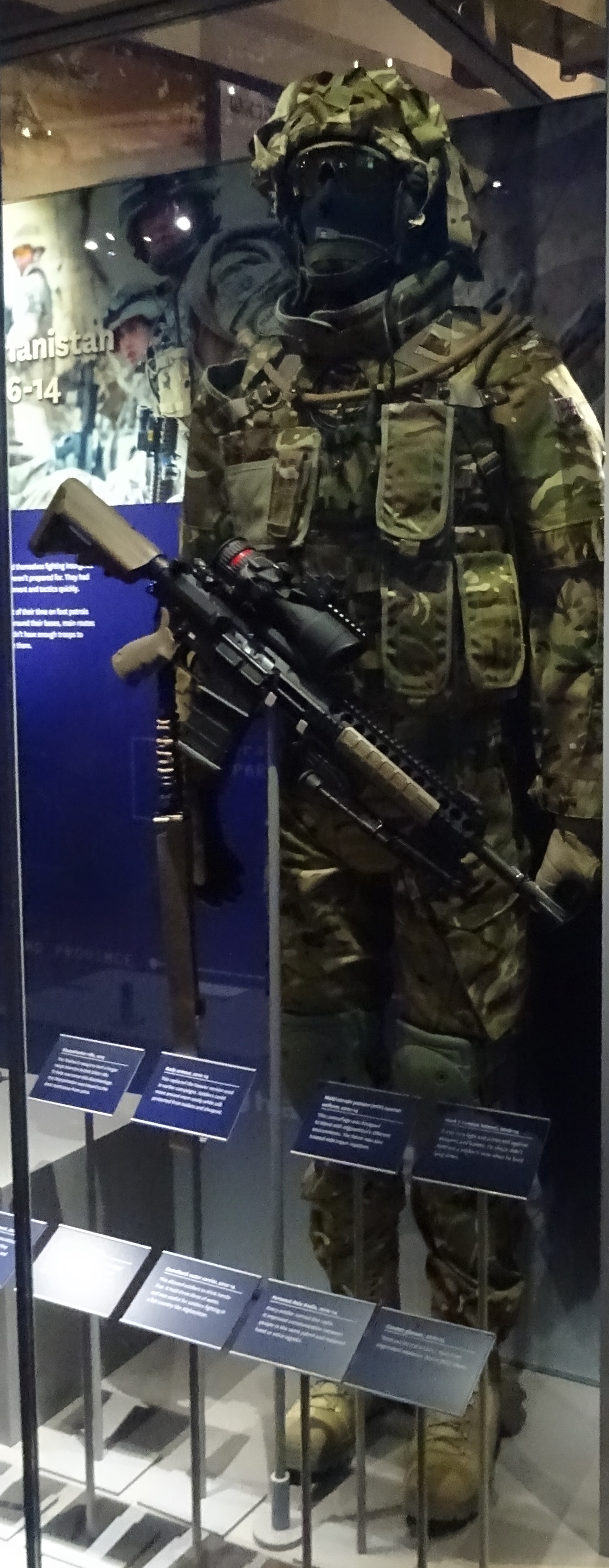
2020s - Soldier

Grenadier Guardsman


Friday, 1 April 2022

Birmingham - Old Contemptible's Pub

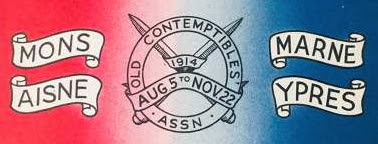
 The Old Contemptible' s pub in Birmingham is named after the men of the British Expeditionary Force (BEF)  who served in Flanders within range of the enemy mobile artillery between 5 August and 22 November 1914.

Old Contemptibles Pub
Birmingham

The name 'Old Contemptibles' arose from an Order of the Day issued by the Kaiser, which mentioned 'Sir John French's contemptible little army'. 

The men involved fought in the battle of Mons, the retreat to the River Marne, where the German advance was halted. The subsequent advance and stalemate that developed on the River Aisne. A a Race to the Sea developed as opposing sides tried to outflank each other, finally ending in the First Battle of Ypres. 

Those who served on the Western Front in 1914 were awarded the Mons Star. A clasp dated 5th August (date of mobilisation) to the 22nd November (end of the First Battle of Ypres) was awarded to those that were actually engaged in the fighting.

1914 Star with Clasp


Old Contemptibles Pub
Birmingham

Old Contemptibles Pub
Birmingham

Old Contemptibles Pub
Birmingham

Old Contemptibles Pub
Birmingham

The pub was originally called The Albion. After the First World War it was run by Frederick Stokes, an 'Old Contemptible' who served with the Royal Warwickshire Regiment. The pub was renamed 'Old Contemptibles in 1953 in recognition of the veterans of the original BEF who gathered in the pub after the conflict.

Frederick Stokes
Royal Warwickshire Regiment


Derby Station Midland Railway Boer War Memorial

 On platform 1 of Derby Station is a memorial to the staff of the Midland Railway who lost their lives during the Boer War 1899-1902. Those staff were either Army Reservists recalled to the colours, or Milita, Yeomanry,Volunteers who volunteered to serve in South Africa. 

Derby Station Midland Railway Boer War Memorial

The memorial was designed by the Midland Railway's company architect Charles Trubshaw and was originally displayed in the booking hall at the main entrance. It was relocated to platform 1 when the station was rebuilt in 1984. 

Derby Station Midland Railway Station


Derby Railway Station 2017

Derby Station 2022

The memorial plaque bears the Midland Railway Crest, an inscription reads;

IN MEMORY OF THE FOLLOWING MEMBERS OF THE MIDLAND RAILWAY COMPANY’S STAFF, WHO LOST THEIR LIVES IN THE SERVICE OF THEIR COUNTRY IN THE WAR IN SOUTH AFRICA 1899 – 1902.

The plaque lists the names of those lost, their place of employment on the railway, and the unit they served with. Three Royal Artillery reservists are recorded on the memorial;

Corporal Peeling, Steeton, 65th Battery Royal Field Artillery

Bombardier Tomilns, Gloucester, 28th  Battery Royal Field Artillery

Driver Ball,Walsall, 78th  Battery Royal Field Artillery


Monday, 14 March 2022

Portsmouth 2022 - Social


Portsmouth Ship Anson

Portsmouth Ship Anson IJ DM

Portsmouth Ship Anson Bar

Portsmouth Ship Anson hand pulls

Portsmouth Old Custom House

Portsmouth Customs House NVAA BFT 2022

Portsmouth Old Town

Portsmouth Still and West IJ

Portsmouth Still and West view

Sunday, 13 March 2022

Bovington - TE Lawrence of Arabia Crash Site

TE Lawrence - Lawrence of Arabia


TE Lawrence - Lawrence of Arabia

Thomas Edward Lawrence was known as Lawrence of Arabia for his expolits in the Middle East during World War One. He was involved in the Arab Revolt (1916–1918) and the Sinai and Palestine Campaign (1915–1918), against the Ottoman Empire.

He studied history at Jesus College, Oxford, from 1907 to 1910, then worked as an archaeologist for the British Museum, chiefly at Carchemish in Ottoman Syria, upto the start of the First World War. 

TE Lawrence (right) Carchemish c.1912

Soon after the outbreak of war in August 1914, Lawrence volunteered for the British Army and with his knowledge of the Middle East he was posted to the Arab Bureau intelligence unit in Egypt. 

In June 1916, an Arab Revolt began when Sharif Hussein of Mecca, the Hashemite tribe leader, raised his flag to signal the start of the uprising. TE Lawrence was sent in October 1916 to work with the Arab Northern Army in the Hejaz, and established a good relationship with it's leader Feisal ibn Hussein.  

The Northern Army's would exploit along the Red Sea Coast capturing the ports of Jeddah, Rabigh, Yabu, Wejh and Aqaba, as well as conducting attacks on the Hejaz railway to disrupt supplies and potential reinforcements to the Turkish garrison in Medina. The operations supported the two Arab Armies fighting the Turks in Medina.

TE Lawrence Aqaba 1917

Lawrence travelled to Cairo to inform GHQ that Aqaba had been captured , to find that following the failure of the attacks on Gazza, the Commander of the EEF General Murray had been replaced by General Allenby. Allenby saw the potential of the Arab Revolt to support his planned advance along the Mediterranean coast with  the Arab Northern Army continuing their attacks on the Hejaz Railway and conducting raids on his right flank to disrupt the Turks.


Lawrence of Arabia meets General Allenby

Lawrence continued his guerrilla operations with the Arab Northern Army, re-reinforced by the Camel Corps, a flight of aircraft, Rolls Royce Armoured cars and 10 (Motor Section) Royal Field Artillery. 

10 (Motor Section) Royal Field Artillery

 The combined efforts of General Allenby's Egyptian Expeditionary Force engaging Turkish Forces along the coast of Palestine, and Lawrence's guerrilla operations weakened the Turkish forces considerably. The defeat of the Turkish Army at the Battle of Megiddo (19 September 1918) and the continued harassment by Lawrence and the Arab Army resulted in a full scale retreat of Turkish forces from Palestine.

 On the 30th September, a contingent from the Arab Army and troops from the Australian Light Horse of the Egyptian Expeditionary Force entered Damascus. On 1st October TE Lawrence of Arabia rode into Damascus in a Rolls Royce. 

TE Lawrence rides into Damascus in a Rolls Royce. 

During his time with the Arabs Lawerence had promised that the British Government would give the Arabs independence on cessation of hostilities and establish an Arab nation. The British Government however had been duplicitous in their dealings with the Arabs. In January 1916 the British and French Governments had agreed the Sykes-Pico agreement which split the Middle East into British and French spheres of influence. 

Lawrence returned to the United Kingdom a full colonel, and sought to convince the British government that the promise he had made to the Arabs of  independence, was in Britains interest.  Immediately after the war, he worked for the Foreign Office, attending the Paris Peace Conference between January and May as a member of Faisal's delegation. 

Paris Peace Conference 1919 King Fisal's Delegation
TE Lawrence second from right

Disilusioned by the British Goverment's treatment of the Arabs, in 1922, he retreated from public life, and enilsted into the Royal Air Force as an ordinarly airman under a false name.   He was later discharded, joined the Royal Tank Corps and petitioned to be transferred to the Royal Air Force which was granted, seving under the name of TE Shaw. In 1926 he wrote Seven Pillars of Wisdom, an accout of his exploits during the Arab Revolt. 

TE Lawrence Seven Pillars of Wisdom

On 13 May 1935, Lawrence was fatally injured in an accident on his Brough Superior SS100 motorcycle in Dorset close to his cottage Clouds Hill, near Wareham.

Aircraftsman Shaw on Brough Superior SS100

Clouds Hill along which Lawrence was travelling

TE Lawrence Crash Site and Memorial

TE Lawrence Crash Site Memorial


Saturday, 12 March 2022

Portsmouth 2022 - CWGC Royal Naval Memorial

 The Portsmouth Naval Memorial commemorates 24,659 sailors of the First and Second Word Wars who have no known grave but the sea.

Portsmouth CWGC Naval Memorial


At the end of the First World War, the Admiralty decided that a memorial should be built in each of the three manning ports, the location of where a man was allocated for administrative purposes when he joined the Navy. Three identical memorials were built at Plymouth, Chatham and Portsmouth. The memorials, built by the Imperial (now Commonwealth) War Graves Commission, consisted of an obelisk prominently located so it could be seen by all vessels using those ports. 

The First World War obelisk is mounted on a plinth which records the Naval actions of WW1 and the names of those lost, over 9,600. 

Portsmouth CWGC Naval Memorial
World War One Obelisk

Portsmouth CWGC Naval Memorial
World War One Commemoration

Portsmouth CWGC Naval Memorial
World War One General Actions at Sea

Portsmouth CWGC Naval Memorial
World War One Single Ship Actions

Portsmouth CWGC Naval Memorial
World War One Actions with Enemy Land Forces

The memorial was extended after World War Two, when low walls were added to an enclosure north of the obelisk and panels added to record nearly 15,000 additional names. 

Portsmouth CWGC Naval Memorial
World War Two Commemoration Wall


Portsmouth CWGC Naval Memorial
World War Two Commemoration

Portsmouth CWGC Naval Memorial
World War Two Commemoration