Blog Search


Sunday, 14 December 2014

Edinburgh - Scottish National War Memorial Edinburgh Castle


 The scale of casualties of the Great War led to a call throughout Britain for memorials to remember those lost during the conflict. As early as 1917 thoughts to commemoration of the losses were underway with London being the main focus for national and Imperial remembrance.
 
The Duke of Athol and other prominent Scots began to promoting the idea of a Scottish National War Memorial in Spring 1917 and gained the support of the King. A letter was sent to the Colonels-in-Chief of all of the Scottish Regiments with a specific plan which included a special memorial building as well as a museum. Approval for the memorial was given by the Government in January 120, however it was not until October 1923 the final design was agreed after turbulent discussions.
 
The Castle had been a British Army Garrison since the Act of the Union in 1707. By 1914 the accommodation was very sub standard and the building of a new cavalry and infantry barracks at Redford was in progress. The move to Redford left an unoccupied building which would be modified to become the Scottish National War Memorial.
 
The Scottish National War Memorial was opened by the Prince of Wales on the 14th July 1927.
 
Opening of Scottish National War Memorial July 1927

Scottish National War Memorial

Scottish National War Memorial
Great War inscription
 
The monument would commemorate Scots of every regiment, service and corps including the animals who in their own way had served and suffered in the war. Rolls of Honour would record the name of every Scotsman, either born in Scotland or had a Scottish born father of mother, who was killed or died as a member of the Armed Forces of the Crown or of the Merchant Navy. This also included affiliated Scottish Regiments such as the London Scottish and Tyneside Scottish.
 
The central part of the Memorial is the Shrine which contains a casket which contains the Rolls of Honour. The walls of the Shrine contain a bronze frieze, with a procession of soldiers and animals which reputedly contains a representative of every rank and unit, an example of every weapon and piece of equipment serving during the First World War. 
 

Scottish National War Memorial
The Shrine

Scottish National War Memorial
Bronze frieze
 The Hall of Honour with the Western and Eastern transepts contain memorials to individual Scottish Regiments, Corps, supporting Regiments, Naval Services (Royal and Merchant) and the Air Services (RFC and  RAF).
 
Following the Second World War, another 50,000 names would be added to the Rolls of Honour, and the Regimental Memorials would have additional Battle Honours placed on them.
 
Those lost in campaigns since 1945, including the Malayan Emergency, the Korean War, Northern Ireland, the Falklands War and the Gulf War are also remembered


ROYAL REGIMENT OF ARTILLERY
 
Scottish National War Memorial
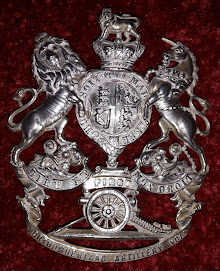
Royal Artillery Memorial
 
Gunner
Gunner Horse


Edinburgh -Scottish National War Museum Edinburgh Castle


Scottish National War Museum


Scottish National War Museum
Scottish Regiments

Scottish National War Museum
Scottish Regiments

Scottish National War Museum
Scottish Regiments

Scottish National War Museum
Black Watch Tel El Kabir

Scottish National War Museum
Scottish VC.s

Scottish National War Museum
Dog Mascot & Owner

Scottish National War Museum
Dog Mascot

Scottish National War Museum
Great War Uniform

Scottish National War Museum
20th Century Small Arms

Scottish National War Museum
Respirators and Helmets

Scottish National War Museum
25 pounder

Edinburgh - Edinburgh Castle Dog Cemetery

The Dog Cemetery in Edinburgh Castle originated in the 1840's. The small garden was constructed on the remains of a medieval tower is the burial place for Regimental Mascots and Officers Dogs.

Edinburgh Castle
Dog Cemetery

Edinburgh Castle
Dog Cemetery

Edinburgh - Edinburgh Castle Prisons of War

Between 1756 and 1815 Edinburgh Castle held Prisoners Of War captured during Britain's wars. Prisoners from the Seven Years War, American Revolution and the Napoleonic Wars would end up in the prison in the Castle.

The Seven Years War was a series of conflicts in Europe, North America, Central America, the West African coast, India, and the Philippines as European powers fought to establish their colonial possessions. Britain clashed with France in Canada in 1754 - 1755.

The American Revolution was triggered by the Declaration of Independence 4th July 1776 and lead to a subsequent War between Britain and America. The French Revolution and the rise of Napoleon resulted in French expansion in Europe, the wars lasting from 1803 to 1815.

During the period the prison contained prisioners captured at sea, and over 1.000 men from America, Spain, France, Holland and Ireland were imprisoned. Officers were  billeted outside the castle, in houses in the town.

Edinburgh Castle Prison

Edinburgh Castle Prison Cell

Edinburgh Castle Prisoners Accommodation

Edinburgh Castle Prisoners Life

Saturday, 13 December 2014

Edinburgh - Edinburgh Panorama

Edinburg Panorama looking North East


Edinburg Panorama looking North East


Edinburgh - Edinburgh Castle Batteries


In 1728 General Wade reported that the castle's defences were decayed and inadequate. This led to a program of work throughout the 1720's and 1730's to strengthen the protection for the castle.  Bastions were added on the north and west side of the castle, the Low Defences and the Western Defences.

It was during this period that most of the artillery defences were built, the Argyle, Forewall, Half Moon and Butes Batteries.

Edinburgh Castle Argyle Battery
18 Pounder cast iron cannon

The Cannon in place are 18 pounder cast iron weapons of the Napoleonic period.

Argyle Battery

The Argyle Battery faces north with a field of fire over the City towards the River Forth. The Battery, named in honour of the Duke of Argyle, consists of six cannon.
 
Argyle Battery


Argyle Battery
Argyle Battery
Forewall Battery

The Forewall Battery consists of 6 cannon behind a stone emplacement wall which face north east.


Forewall Battery
Forewall Battery looking NE
 

Half Moon Battery

Adjacent to the Forewall Battery is a continuation of artillery positions with. the Half Moon Battery. Its six guns face east overlooking the Castle Esplanade.

Half Moon Battery

Half Moon Battery east overlooking Castle Esplanade


Half Moon Battery looking ovet the Esplanade to Pentland Hills


Butes Battery

Butes Battery, also know as the Druy Battery after Captain Theodore Drury covers the western side of the castle.

Friday, 12 December 2014

Edinburgh - Edinburgh Castle Mons Meg

Mons Meg was built on the orders of Phillip the Good, Duke of Burgundy in 1449, and was gifted to James 1453. it derives it's name from the fact it was cast in Mons, Belgium and the huge barrel moved to Scotland for mounting on it's carriage.

Mons Meg
Edinburgh Castle
The barrel weights weighs 6,970 kg (15,366 pounds ), is 4.6 m (15 feet ) in length.


The muzzle loading cannon has a caliber of 510mm (20 inches), and was capable of firing a 180kg (400 pounds) stone ball about 3,000 meters (roughly 2 miles). It had a rate of fire of 8 to 10 times a day (due to the considerable heat generated when fired).


The size of the weapon made it impractical to move in a battle and was only used once at the Siege of Norham Castle in 1513. Together with a similar cannon, they destroyed the outer and inner walls of the castle in a 10 day bombardment. Retired from active service it was used for firing salutes until it's barrel burst 14th October 1681. It was moved to the Tower of London in 1754, before being returned to Edinburgh Castle in 1829.

#

Thursday, 11 December 2014

Edinburgh - Edinburg Castle Great Hall Weapons

Edinburgh Castle
Great Hall

Claymore
The Claymore was a two handed sword used by Scots in their fights between the Clans and with the English from 1400 to 1700

Medieval Armour
 
Armour for soldiers originated around 500 BC with the invention of chainmail. This was developed by the introduction of plates to protect more venerable parts of the body eventually leading to full plate armour in the 13th century. This type of armour would last until the 17th century with increased velocity of firearms making full armour obsolete. The use of breast plates and back plate would continue through Napoleonic tmes into the 20th century.

Pole weapons and Broadswords

Poled weapons in Medieval times included the Pole Axe (left), Halbert (centre) Lochaber Axe (right). The Scottish Broadsword with it's unique hilt appeared in the mid 16th century and would last till the 18th century.

Flintlock Pistols

Flintlock pistols were introduced at the beginning of 17th Century to be used alongside the sword.

Georgian period French Mortar
Gun powder artillery was first used in the 13th century. The French developed the Bombarde-Mortier during the latter part of the 15th century, a weapon that would be produced in varying calibers over the following centuries.