LongÉireannachWilliam Butler Yeats (P63) is a Samuel Beckett-class offshore patrol vessel of the Irish Naval Service. It's role is to provide border protection, immigration law-enforcement, fisheries protection, as well as search and rescue duties.
LÉ William Butler Yeats (P63) Samuel Beckett-class offshore patrol vessel
It is one of four Irish ships (LongÉireannach - LÉ) in the class, all named after Irish Poets. The LÉ William Butler Yeats was built by Babcock Marine Appledore and commissioned 17 October 2016. It has ships complement of 44 (plus 10 trainees). It carries three x 8 m (RHIB) rigid-hulled inflatable boats. It uses Unmanned Air Vehicles (UAV) to provide aviation capability. The ship can carry three 6.1 m sea containers and has a 5-ton 9.56 m crane aft.
LÉ William Butler Yeats (P63) Samuel Beckett-class offshore patrol vessel
It is armed with a 76 mm Oto Melara cannon and two 20 mm Rheinmetall cannons. There are mountings for 7.62 mm & 12.7 mm machine guns.
LÉ William Butler Yeats (P63) 76 mm Oto Melara cannon
The LÉ William Butler Yeats arrived on the River Tyne on 23rd October 2022. It was tied up at Spillers Wharf.
LÉ William Butler Yeats (P63) Arriving at Spillers Wharf
LÉ William Butler Yeats (P63)
The ship was on a two-day tour to take part in the Tyneside Irish Festival.
LÉ William Butler Yeats (P63) River Tyne Spillers Wharf
LÉ William Butler Yeats (P63) River Tyne Spillers Wharf
A reception was held on the evening of 25th October for the Tyneside Irish community hosted by the Officer Commanding and the Consul General of Ireland for Northern England.
LÉ William Butler Yeats (P63) Tyneside Irish Reception IJ
LÉ William Butler Yeats (P63) Tyneside Irish Reception Irish Band
LÉ William Butler Yeats (P63) Officer Commanding
LÉ William Butler Yeats (P63) Tyneside Irish Reception
On 20th May 1940, the men of the 1st Battalion Tyneside Scottish (Black Watch) engaged the XV Panzer Corps in the area of Ficheux.
The Germans were highly trained soldiers equipped with tanks and armoured vehicles. The Tyneside Jocks were in the main, trainee troops with no combat experience, and lightly equipped.
Despite the lack of experience and equipment, over the course of five hours, the Tyneside Scottish successfully blocked the German progress until eventually they were overcome.
The action would cost the Tyneside Scottish 100 casualties, with many more captured and spending the war as Prisoners of War.
The remnants of 1TS would make their way to Dunkirk and evacuated to the UK.
Dunkirk Harbour
.
TS RAA Dunkirk
------0------
The Dunkirk Memorial commemorates 4,505 casualties of the British Expeditionary Force who have no known grave, most of whom were lost during the Battle of Dunkirk.
Amongst those commemorated are men from 1st Battalion Tyneside Scottish (Black Watch)
The Dunkirk Town Cemetery contains 1,042 graves from both World Wars. There are 460 casualties from the First World War. The town was shelled throughout WW1 and was a hospital centre. The 792 graves from the Second World War include 213 unidentified casualties. As well as those killed during the Battle of Dunkirk, the cemetery contains graves of bodies washed up on the beaches in the aftermath of the evacuation.
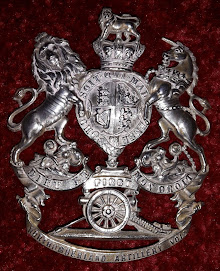
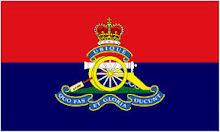
Tyneside Scottish Branch Royal Artillery Association Somme Battlefield Pipe Band
The Tyneside Scottish Branch Royal Artillery Association and the Somme Battlefield Pipe Band held a commemoration to remember the actions of the 1st Battalion Tyneside Scottish (Black Watch) at Ficheux on 20th May 1940.
The commemoration was held at the Bucquoy Road Cemetery which overlooks the battlefield where the men of the Tyneside Scottish and Durham Light Infantry fought their blocking action.
Bucquoy Road Cemetery Cross of Sacrifice
Somme Battlefield Pipe Band march on
Tyneside Scottish Branch RAA
Somme Battlefield Pipe Band
Somme Battlefield Pipe Band
Somme Battlefield Pipe Band Tyneside Scottish Banner
The Ceremony included a remembrance of Lance Corporal Freddie Laidler, a
piper who lost his life playing his pipes to encourage the Tyneside Jocks fighting. As the battle raged, Piper
Freddie Laidler played his pipes to encourage the fighting Tyneside Jocks. The
Regimental history records “piper to the last – carried his pipes into
action and was killed with them”
Black Watch (Royal Highlanders) 1st Bn. The Tyneside Scottish
Date of Death: Died 20 May 1940 Age 20 years old
Buried: BUCQUOY ROAD CEMETERY, FICHEUX
Sp. Mem. Plot 8. Row E. Grave 6.
Son of Frederick Laidler, and of Margaret Laidler, of Gosforth, Newcastle-on-Tyne.
TREAD SOFTLY, MY SON LIES NEAR
Bucquoy Road Cemetery Piper Laidler's grave
Freddie Laidler was the uncle of Dire Straits guitarist Mark Knopfler who wrote a song to remember his uncle – Piper to the End.
PIPER TO THE END
When I leave this world behind me to another I will go And if there are no pipes in heaven I'll be going down below If friends in time be severed someday we will meet again I'll return to leave you never be a piper to the end
This has been a day to die for Now the day is almost done Up above, a quiet seabird turns to face the setting sun Now the evening dove is calling and all the hills are burning red And before the night comes falling clouds are lined with golden thread
We watched the fires together shared our quarters for a while walked the dusty roads together came so many miles
This has been a day to die on Now the day is almost done Here the pipes will lay beside me silent with the battle drum If friends in time be severed someday we will meet again I'll return to leave you never be a piper to the end
Presentation to Somme Battlefield Pipe Band Lyrics of Piper to the End
In March 1939, with the expectation of war, the Territorial Army (TA) was expanded. Existing TA units were required to raise a duplicate unit. The 9th Battalion Durham Light Infantry (DLI) raised the 12th Battalion, which was authorised to bear the Tyneside Scottish honour title becoming the 12th (Tyneside Scottish) Battalion, Durham Light Infantry.
When war was declared on 3rd September 1939, 12 (TS) DLI mobilised, establishing its Headquarters in Gateshead, and conducting training in the nearby Ravensworth Park.
In February 1940 the Battalion secured affiliation with a Scottish unit and became the 1st Battalion Tyneside Scottish Black Watch (Royal Highland Regiment).
The connection with the Durham Light Infantry continued throughout the war, the Tyneside Scottish being part of 70 (Infantry) Brigade alongside 10 DLI and 11 DLI.
The 1st TS left the North East on 23rd April 1940 for Southampton where they embarked for Le Havre, arriving on the 25th April. They and the rest of 70 Brigade were part of the 23rd (Northumbrian) Division, their task to provide labour for the construction of aerodromes and defences.
The Tyneside Scots proceeded to an aerodrome site at Beauvoir near Frevent (40km west of Arras) where they provided working parties for it’s construction. In their ‘spare time’ they continued to train.
German Invasion of Western Europe
On the 10th May 1940, Hitler launched his invasion of Western Europe, the German Blitzkreig being unleashed on Holland, Belgium and France. In response, the British Expeditionary Force (BEF) and the First French Army advanced into Belgium and took up defensive positions on the River Dyle.
The first indications to the Tyneside Scottish of the situation were on the 12th May when Belgian soldiers and refugees began to stream though their location. By the 15th May, the Germans had crossed the River Meuse, and were in danger of outflanking the main British forces still in Belgium.
The 70th Brigade, including the Tyneside Scottish, were ordered to establish defensive positions along the Canal du Nord, and began the 65km (40 miles) move to their new location on 17th May. They initially took up positions on the right flank of 70th Brigade, before becoming the 23rd Divisional Reserve.
To their north, the BEF and French Army were being forced back, and on the 19th May 1940, the 70th Brigade were ordered to move to Saulty (25 km – 15 miles SE of Arras).
During the evening of 19th / 20th May, the Tyneside Scottish were en-route to Saulty, staying overnight at Neuville Vitasse. On the morning of the 20th, German tanks were breaking through between Arras and Neuville Vitasse, and orders were given for the TS and 70 Brigade to continue their move.
As they withdrew the TS and other Brigade units came under fire from the advancing Germans and they began to establish blocking positions from Mercatel, through Ficheux to Blaireville.
On 20th May 1940, the men of the 1st Battalion Tyneside Scottish (Black Watch) engaged the XV Panzer Corps in the area of Ficheux.
The Germans were highly trained soldiers equipped with tanks and armoured vehicles. The Tyneside Jocks were in the main, trainee troops with no combat experience, and lightly equipped.
Using limited anti-tank weapons, fighting on till overrun, and attacking with bayonet charges, the Tyneside Jocks blocked the German advance, till eventually they were overcome.
Despite the lack of experience and equipment, over the course of five hours, the Tyneside Scottish lived up to the motto established by their predecessors during the First World War – Harder than Hammers (You can break a hammer, but you can not break the fighting spirit of a Tyneside Jock).
The actions of the Tyneside Scottish would prove vital. The 5 hour delay they caused provided time for a counterattack, which included men of the 50th (Northumbrian) Division, to be mounted. This helped to create a pocket which was formed on from 23rd May through which the British Expeditionary Force would withdraw to Dunkirk.
The action would cost the Tyneside Scottish 100 casualties, with many more captured and spending the war as Prisoners of War. The remnants of 1TS would make their way to Dunkirk and evacuated to the UK.
Many of those lost were buried in the Buquoy Road Cemetery which overlooks Ficieux and the battlefield where the Tyneside Scottish fought.
On 9th April 1917 British Empire forces launched their offensive in the Arras Sector. The Roclincourt Military Cemetery contains many graves from that first day of the Battles of Arras of soldiers of the 51st (Highland) and 34th Divisions. The 34th Division included the Tyneside Scottish and Tyneside Irish Brigades.
Canadians attacked and secured Vimy Ridge north of Arras, the British Third Army attacking from Arras along the River Scapre. The weather on the 9th, Easter Monday, was wintry, snow was falling and sleet was blowing towards the German lines. The combination of the preliminary bombardment, the wintry weather and the hurricane bombardment would all contribute to the British and Canadian efforts.
North of the River of the River Scrape and right of Vimy Ridge XVII Corps attacked towards their ultimate objective, the village of Fampoux. On the left were the 51st (Highland), center 34th Division right the 9th Scottish Division.
The 34th Division attacked with all three brigades in line. The 101st Brigade on the right, 102 Tyneside Scottish Brigade in the centre, the 103rd Tyneside Irish left.
The initial assault by the Tyneside Scottish would be conducted by the 2nd Battalion Tyneside Scottish (21st NF) on the right, and the 3rd Battalion Tyneside Scottish (22nd NF) on the left. In the early hours of 9th April 1017, the Tyneside Jocks left their trenches, creeping into no mans land to be close to the German wire which had been cut by the preliminary artillery bombardment.
Aided by a creeping barrage, the two assaulting battalions fought through the German lines to secure their objectives. Once firm, the 1st Battalion Tyneside Scottish (20th NF) and the 4th Battalion Tyneside Scottish (23rd NF) passed through and in the second phase of the operation, secured the planned objectives.
By the evening of the 9th April, the Tyneside Scottish were consolidating their positions as the snow continued to fall.
The Roclincourt Military Cemetery is the resting place for many Tyneside Scots who lost their lives on that day.
Roclincourt Military Cemetery Cross of Sacrifice
Roclincourt Military Cemetery Unknown Tyneside Scottish Soldier
Roclincourt Military Cemetery Tyneside Scottish graves
Roclincourt Military Cemetery Tyneside Scottish & Irish graves
Roclincourt Military Cemetery German graves
.
Roclincourt Military Cemetery Laying Tyneside Scottish
Roclincourt Military Cemetery Tyneside Scottish wreath

%20Samuel%20Beckett-class%20offshore%20patrol%20vesse.jpg)
.jpeg)


.JPG)
.JPG)


%20Dunkirk.JPG)

%20Dunkirk%20Memorial.JPG)


.jpg)

.JPG)

.jpg)
.JPG)


.JPG)


.JPG)
.JPG)