Blog Search


Showing posts with label Arromanches. Show all posts

Thursday, 12 March 2026

Ex Magpie Progress 26 - Arromanches D-Day 75 Garden

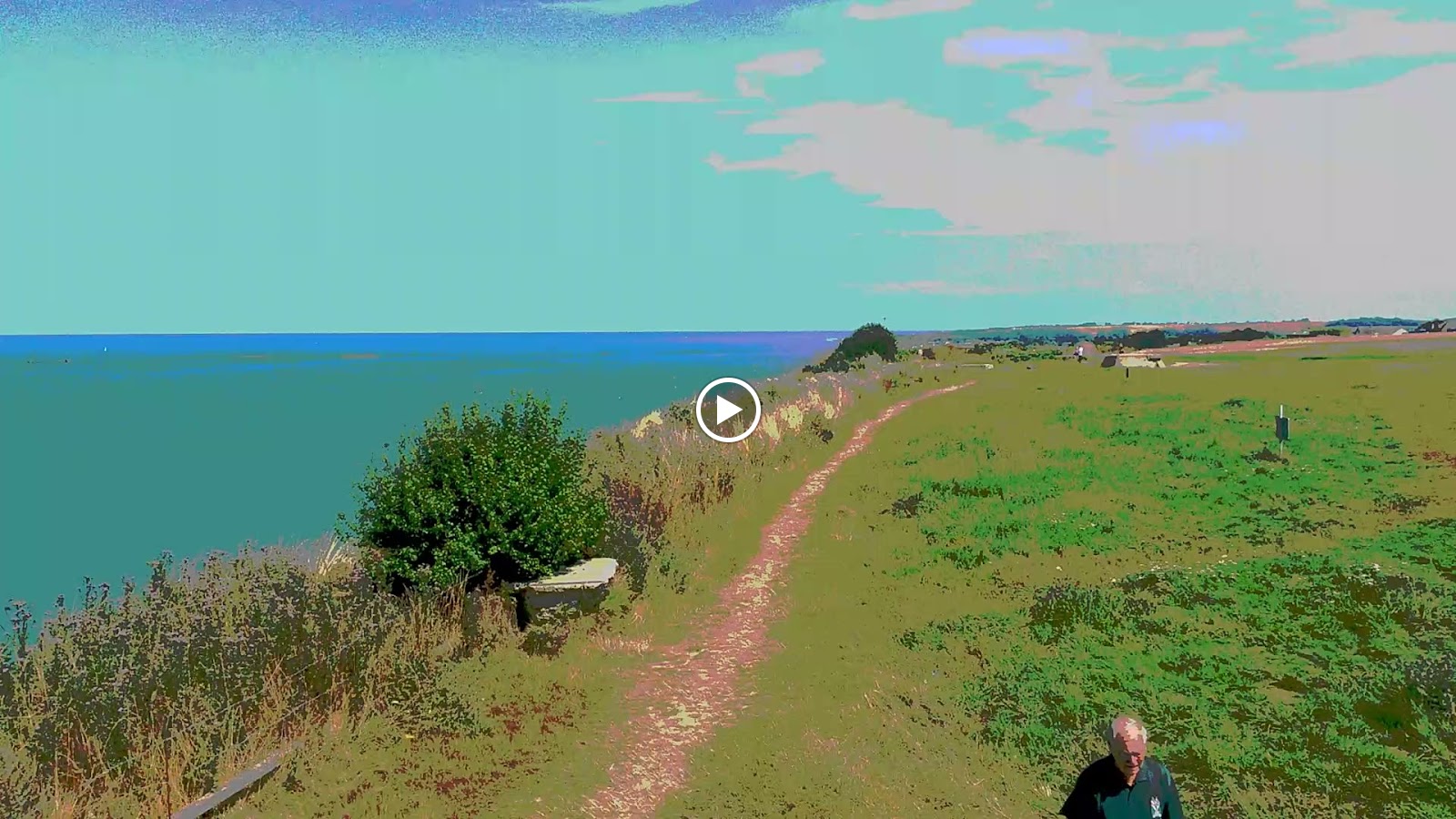
 Located on the clifftops at Arromanches overlooking Gold Beach is the D-Day 75 Garden, opened in 2019 on the 75th anniversary of the Normandy Landings.

Arromanches D-Day 75 Garden IJ

Arromanches D-Day 75 Garden

Arromanches D-Day 75 Garden

Arromanches D-Day 75 Garden

Arromanches D-Day 75 Garden

Arromanches D-Day 75 Garden


Ex Magpie Progress 26 - Arromanches Mulberry Harbour


Arromanches Mulberry Harbour IJ


The D-Day landings on 6th June 1944 would secure the beachhead required for the the subsequent liberation of Europe. The strategic problem for the allies was the breakout into occupied Europe would require hundreds of thousands of men and vehicles, together with millions of tons of materiel to be landed in France for ongoing operations. They would require a deep water port to sustain the logistics chain. In 1942 a raid on Dieppe ended in failure which proved that an attack on well defended ports was not a viable option.

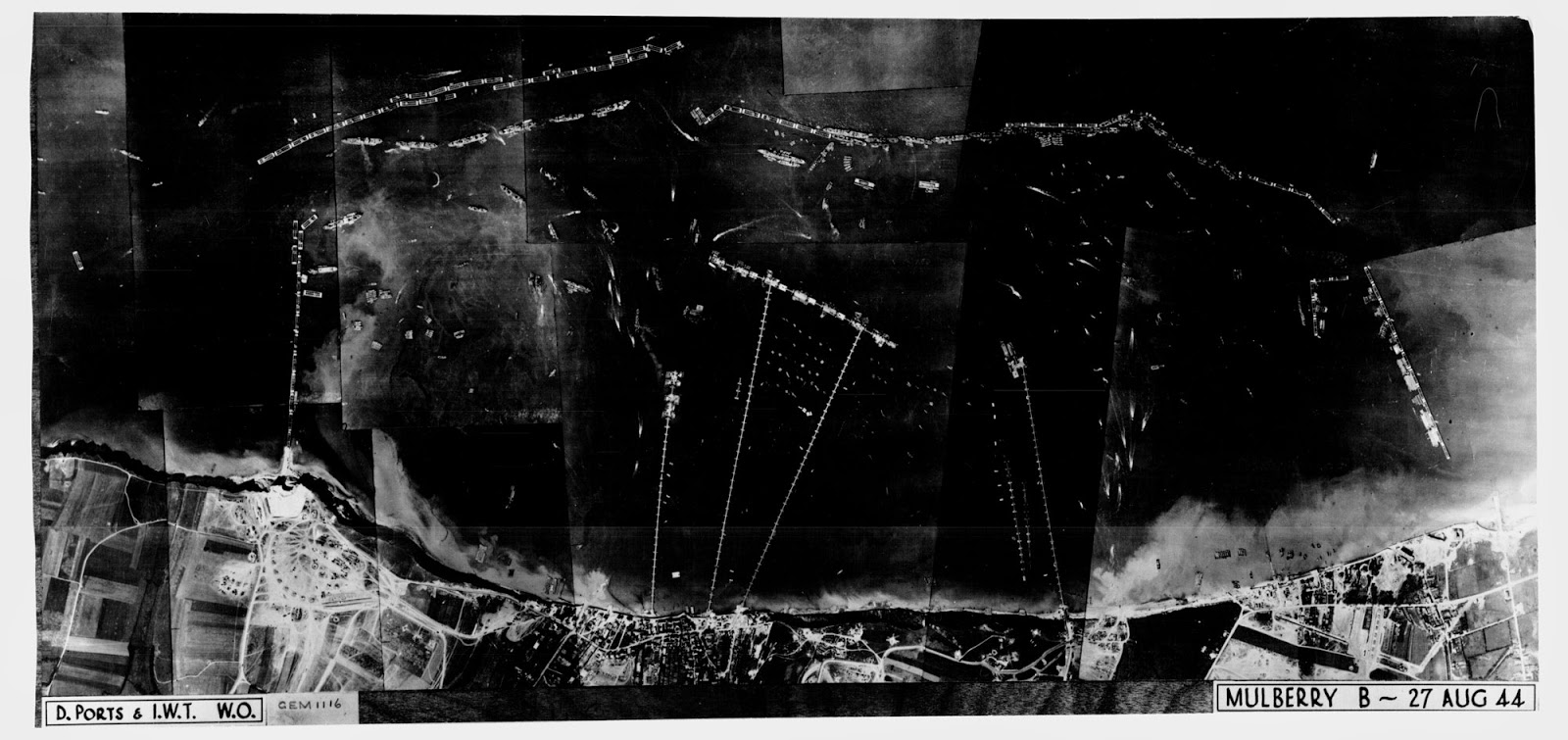
The solution was to build two ports in the Normandy Beachhead. The ports would be constructed from pre-fabricated components which were constructed in Great Britain and towed across the channel where they were assembled into the two harbours; Mulberry A at  Saint-Laurent-sur-Mer off Omaha Beach  to supply the United States forces and  Mulberry B (Port Winston) at Arromanches off Gold Beach to supply the British and Canadian forces.  

Mulberry Harbour

The first supplies started coming ashore on 14th June 1944. 

Mulberry Harbour Arromanches Supplies being landed
Source: IWM A24361

Five days later the worst storm in 20 years hit the Normandy coast destroying the American Mulberry.  

Normandy storms batter Mulberry Harbour

Mulberry B at Arromanches suffered damage, but survived the storm. It was repaired using parts from the American harbour and operated for 10 months, outlasting the 3 months it was expected to operate.

During the period in operation 2.5 million men, 500,000 vehicles and 4 million tonnes of materiel were landed at Port Winston, the Arromonches Mulberry harbour.

Port Winston Arromanches Mulberry harbour.

Arromanches 2026

Arromanches Beach 2026

Arromanches Mulberry Harbour 2026

Arromanches  looking over GOLD BEACH  2026

Arromanches Mulberry Harbour 2026 IJ


Sunday, 11 October 2015

Op Normandie - Arromanches Mulbery Harbour


The Normandy Invasion in June 1944 was only the start of the Allied campaign to free Europe from German occupation. The breakout from the beachhead into Normandy and beyond required substantial deployment of troops, equipment and supplies. The dilemma for the Allies was the requirement to have a port capable of handling ocean-going ships with sufficient depth of water and the port facilities to offload the heavy and bulky cargoes.

The ports in Northern France were heavily defended, and the disastrous raid on Dieppe in 1943 had shown that attacking a port would be costly, and not guaranteed of success.

The answer was the construction of an artificial port to sustain the logistical requirements of the Allies.  The Mulberries comprised floating roadways and pierheads which went up and down with the tide. In order to avoid rough seas, huge hollow concrete blocks and old hulks were sunk in order to form a breakwater.
The individual components were constructed around the UK, moved to various ports on the south coast, then towed across the English Channel. The first time everything would come together was on the coast of Normandy.


Mulberry Harbour Caisson being towed across the English Chanel

Two Mulberry harbours were built. One on Omaha Beach which was destroyed in a storm 19th June , and one at Arromanches which became the Allies main logistical location in Europe until the capture of Antwerp in September 1944.

Arromanches was liberated in the evening of June 6th and the very next day the first ships were scuttled. June 8th saw the submersion of the first Phoenix caissons and June 14th the unloading of the first cargoes. The port, which became known as Port Winston was totally operational by the beginning of July 1944.

Arromanches - Mulberry 'B' PORT WINSTON

Mulberry Harbour - Pier

Mulberry Harbour - Pier and Roadway

Mulberry Harbour Roadway

Mulberry Harbour - Port Winston


Roadway and Beach 1944
 
Roadway and Beach 2015
 
Roadway and Beach 2015


Arromanches 1944

Arromanches 2015

Arromanches  Beach 2015


The contribution of Port Winston to the outcome of World War Two was immense. In the 10 months after D-Day 2.5 million men, 500,000 vehicles, and 4 million tonnes of supplies sustained the Battle for Normandy and beyond.
What did the Enemy think of the Mulberries? After the war, Albert Speer, the great architect of German defences and manager of the forced labour, Todt Organisation, said:

"To construct our defences we had in two years used some 13 million cubic metres of concrete and 1½ million tons of steel. A fortnight after the Normandy Landings, this costly effort was brought to nothing because of an idea of simple genius. As we now know, the invasion force brought their own harbours, and built, at Arromanches and Omaha, on unprotected coast, the necessary landing ramps."


*

Wednesday, 20 August 2014

Op Ducy - Arromanches

In order to exploit beyond the Normandy Beachhead it was essential that port facilities were available for bulky cargo, vehicles and supplies in order to sustain operations.

In August 1942 a raid on Dieppe had failed, and it became obvious that trying to take heavily defended ports was not viable. For the Normandy operation it was therefore decided to create a port made up of pre-fabricated components.

The port would consist of concrete caissons sunk offshore to create the port infrastructure, connected to the shore by floating runways. Old ships would be sunk as block ships to provide breakwaters. Two harbours would be constructed , one off Omaha Beach and one off Gold Beach.


Mulberry Harbour Concept

The harbours were constructed in multiple locations around the United Kingdom and towed across the channel into position. On 9th June 1944 (D plus 3), both harbours were in position.


Mulberry caissons being towed into position


Mulberry Harbour

Mulberry Harbour roadway

The Royal Engineers constructed the harbour at Arromanches with 33 jetties and 10 miles (15 km) of roadway, and it was named PORT WINSTON. 

Mulberry B harbour - Arromanches


Arromanches Map

Arromanches Panorama - Port Winston

Arromanches Mulberry Harbour remains

Arromanches

Arromanches Roadway remains

Saturday, 28 April 2012

D-Day - Arromanches

In order to exploit beyond the bridgeheads and to ultimately capture deep water ports, a mechanism was required to offload the thousands of men and vehicles, and tons of supplies necessary to sustain operations. Thus the Mulberries were created to provide temporary port facilities, until permanent ports had been secured.

The proposed harbours would consist of block ships and huge caissons floated into position creating breakwaters, piers and other structures to provide quays and roadways to create the port. The caissons were built in a number of locations and would be towed to Normandy by tugs and be operational by D+3. Two harbours would be constructed, Mulberry A at SAINT LAURENT, OMAHA BEACH and Mulberry B at ARROMANCHES on GOLD BEACH, the latter would later become known as Port Winston.


Arromanches - remains of Mulberry Harbour
6th June Museum Arromanches
6th June Museum - Mulberry Harbour model

6th June Museum - Mulberry Harbour model