Friday, 12 July 2024

National Memorial Arboretum 2024 - Glider Pilot Regiment Memorial


Glider Pilot Regiment Memorial

The Glider Pilot Regiment was part of the British Airborne Forces from 1914 to 1957.  
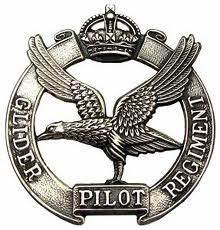
The British airborne operations capability was set up under the direction of  Prime Minister Winston Churchill who was impressed by successful German airborne operations in Belgium in May 1940.  The Parachute Regiment was formed on 22 June 1940. The Glider Pilot Regiment was formed 21st December 1941.  

Glider Pilot Regiment formation

Glider pilots were volunteers from throughout Army and were trained by the RAF. All who qualified as pilots to serve in the Regiment were engaged at the minimum rank of Sergeant. 

Glider Pilot Regiment Pilots

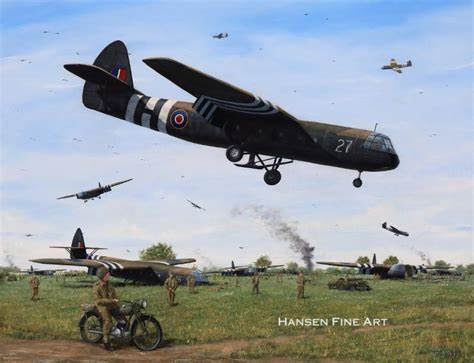
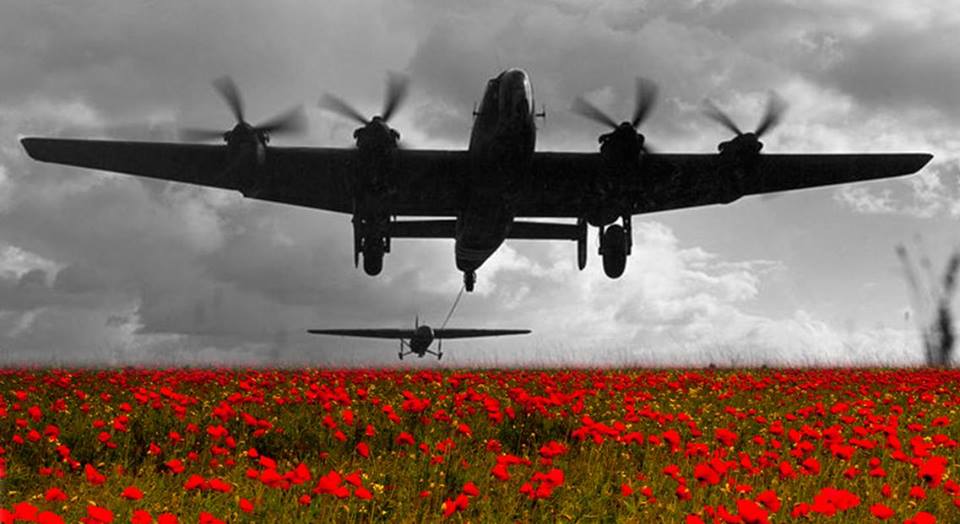
The gliders were towed into to the landing zone areas by RAF aircraft. Once they were near the landing zone the tow ropes would be released and the gliders would glide to their allocated landing zone.  

Glider under tow

Glider Pilots and Troops in Glider

Once the glider pilots had landed their aircraft on a landing zone they would operate as infantry till they could be recovered for future operations. 

Glider Pilot operating as infantry

Glider Pilot Regiment Operations

Operation Freshman - 19 November 1942

​Landing of commandos to destroy German heavy water production at Vermok in Norway. 

Operation Freshman

Operation Ladbroke - 9/10 July 1943

Part of Operation Husky, the invasion of Sicily. Landing of  troops from the 1st Airborne Division close to the Ponte Grande bridge which they were to capture and hold.


Operation Ladbroke


Operation Fustian - 13/14 July 1943

Part of Operation Husky, the invasion of Sicily. This operation was the glider-borne section of a 1st Parachute Brigade assault on the Primosole Bridge. 

Operation Fustian - Primosole Bridge

For their contribution to Operation Husky the Glider Pilot Regiment were awarded the battle honours;

Landing in Sicily

Sicily 1943


Operation Bunghole - 19 February 1944

Transport of Russian military mission to meet up with Tito and his partisan force.


Operation Tonga - 5/6 June 1944

Initial airborne assault on Normandy as part of Operation Overlord. Operation included  coup de main landings at the Caen Canal and River Orne bridges, Benouville. The bridge captured over the Caen Canal would be name Pegasus Bridge. Glider borne troops were also part of the action that captured the Merville Battery.

Operation Tonga - Gliders ready for Normandy

Operation Tonga - Pegasus Bridge

Operation Tonga - Normandy


Operation Mallard - 6 June 1944

Part of Operation Overlord to land an armoured reconnaissance regiment direct to the battle-field. The operation also transported infantry and heavy support weapons. 

The Glider Pilot Regiment's contribution to Operation Overlord was recognised with the award of the battle honours;

Normandy Landing

Pegasus Bridge

Merville Battery


Operation Dingson 35A - 5 August 1944

Delivery of ​ thirty-five French SAS soldiers and ten jeeps to join up with French resistance fighters.


Operation Dragoon - 14 August 1944

Airborne element of the invasion of Southern France was carried out by 1st Airborne Task Force (a mix of Allied gliders and paratroops).

For their actions the Glider Pilot Regiment were awarded the battle honour;

Southern France


Market Garden - 17-19 September 1944

Part of the 6th Airborne Division operation to capture the bridge at Arnhem. Transport of 1st Airlanding Brigade.  
Arnhem

Arnhem Landing Zone

Arnhem Landing Zone

Glider Pilots fighting in Arnhem

RA Glider Borne Troops

1st Air landing Light Regiment RA

1st Forward Observation Unit (Airborne) RA

1st  Air landing Anti-Tank Battery RA

2nd   Air landing Anti-Tank Battery RA


The Glider Pilot Regiment were awarded the battle honour;

Arnhem 1944


Operation Manna - 13/14 October 1944

Operation to land troops and equipment at Megara to assist in the liberation and occupation of Athens.


Operation Varsity - 24 March 1945

Part of Operation Plunder, the Anglo-American-Canadian action to cross the northern Rhine River and from there enter Northern Germany. Combined gilder and paratroop airborne operation, largest in history. 

Operation Varsity

For their part in enabling the crossing of Rhine the Glider Pilot Regiment were awarded the battle honours;

Rhine

North-West Europe campaign of 1944–45

----0----

The actions of the Glider Pilot Regiment during World War Two proved their motto Motto(s) Nihil est Impossibilis. "Nothing is Impossible"

National Memorial Arboretum
Glider Pilot Regiment Memorial
Battle Honours

------0------

The Commonwealth War Graves Commission records the names of 477 of the Glider Pilot Regiment who lost their lives during he Second World War.

------0------

The Colonel Commandant ot the  Glider Pilot Regiment was the notable Gunner Field Marshall  Alanbrooke,  Chief of the Imperial General Staff (CIGS) during the Second World War, and Churchill's military adviser.

In 1957 the Glider Pilot Regiment was merged with the Air Observation Squadrons of the Royal Artillery into a new unit to form the Army Air Corps (AAC). The need for military gliders was diminished with the introduction of the helicopter which took over the role of inserting units from the air during the 1950's. 


National Memorial Arboretum 2024 - Polish Forces Memorial

The Polish Forces Memorial commemorates the Polish men and women who gave their lives during World War Two. 

Polish Forces Memorial

Polish armed forces were engaged from the very first day of the war when Germany invaded their homeland on 1st September 1939 until the surrender of German forces on 8th May 1945. They were the fourth largest Allied forces in Europe, after those of the Soviet Union, United States, and Britain, fighting on land, sea, and in the air.


The Polish Armed Forces in the West fought under British command and numbered 195,000 in March 1944 including about 20,000 personnel in the Polish Air Force and 3,000 in the Polish Navy. At the end of World War II, the Polish Armed Forces in the west numbered 195,000 and by July 1945 had increased to 228,000, most of the newcomers being released prisoners of war and ex-labor camp inmates.


The memorial consists of a bronze sculpture mounted on a plinth featuring four figurines representing the main branches of the Polish Armed forces, surmounted by an eagle, a the Polish State emblem. The Memorial statue is set within an 18-metre diameter circle which has with four walls at it's edge inscribed with a record of the  the Polish contribution in the Second World War.

Polish Forces Memorial

The four figurines are a a sailor, soldier, airman and member of the Polish Underground Army.

The sailor is a crew member of the Polish destroyer Błyskawica. The soldier is from the Battle of Monte-Cassino. The airman is a pilot of the Polish 303 Squadron RAF that fought in the Battle of Britain. The figurine representing the Polish Underground Home Army is a woman courier wearing civilian clothes.

Polish Destroyer Blyskawica

British Soldiers Monte Cassino

303 (Polish) Squadron Royal Air Force

Polish Home Army

The walls around the memorial record the significant contribution Polsih Forces made during World War Two.


The Polish Campaign 1939

Polish Underground State 1939-1945

The Warsaw Uprising August-October 1914

Breaking the Enigma Code


The Polish Intelligence Service 1939-1945

The French and Norwegian Campaigns 1940

Polish First Corps

The Polish Carpathian Campaigns 1940

The Polish Carpathian Rifle Brigade


Polish Second Corps

The Polish Navy

The Polish Air Force (RAF)

The Polish 1st Armoured Division


The Polish 1st Independent Parachute Brigade

Polish Section of S.O.E. & Poland's 'Silent and Unseen'

Polish Women in WWII

The Polish Army on the Eastern Front


National Memorial Arboretum 2024 - Evacuees Memorial

The National Memorial to the Evacuation is dedicated "To Remember the Evacuation of Millions of British Children Separated from their Families during WWII (1939-1945)". 

National Memorial to the Evacuation

In 1996 the  British Evacuees Association was formed to bring former evacuees together to remember their experiences and ensure future generations know their story.  On 25th July 2017, the associations 21st Birthday, the National Memorial to the Evacuation was dedicated by HRH The Duke of Gloucester.


During the Second World War it is estimated that over three million people were evacuated from areas at risk from aerial bombing or seaborne invasion to places considered to be less risk. Operation Pied Piper, that commenced in 1 September 1939, officially relocated 1.5 million people.; 827,000 children of school age; 524,000 mothers and young children (under 5); 13,000 pregnant women; 7,000 disabled people and over 103,000 teachers and other helpers.

Children were separated from their parents,  labelled like pieces of luggage, and transported to the countryside together with their guardians.

Evacuees leaving home

Evacuees entering station
 
Evacuees labelled about to board train

When they arrived at their destinations, which were unknown to the evacuees, they were housed by local families. 

Evacuees arriving at their destination

Evacuees arriving and been processed


National Memorial Arboretum - Shot at Dawn

 The Shot at Dawn Memorial is a monument commemorates the 306 British Army and Commonwealth soldiers executed after courts-martial for desertion and other capital offences during World War I. 

During World War One committing serious civil and military offences could result in the death penalty and the means of execution was the firing squad. A sentence that was traditionally carried out at dawn.

Shot at Dawn

During World War One 3,080 British Soldiers (1.1% of those convicted) were sentenced to death. Of these, 89% were reprieved and the sentence converted to a different one. 346 men were executed. Their crimes included desertion – 266; murder – 37; cowardice in the face of the enemy – 18; quitting their post – 7; striking or showing violence to their superiors – 6; disobedience – 5; mutiny – 3; sleeping at post – 2; casting away arms – 2. "

Of the 346 men who were executed, 309 were pardoned: the remaining 37 were executed for murder, and would have been executed under civilian law.

The memorial portrays a young British soldier blindfolded and tied to a stake, ready to be shot by a firing squad. The memorial was modelled on the likeness of 17-year-old Private Herbert Burden, who lied about his age to enlist in the armed forces and was later shot for desertion.

Shot at Dawn Memorial

It is surrounded by a semicircle of stakes, on each of which are listed the names of the soldiers executed in this fashion.

Shot at Dawn Memorial


National Memorial Arboretum 2024 - GPO Memorial Garden

 The GPO Memorial Garden is dedicated to the thousands of people of the General Post Office who died, were wounded or suffered whilst maintaining postal services throughout the two World Wars. The post office service provided the vital communication between those serving and the families and friends at home.

GPO Memorial

GPO Memorial Garden

GPO Memorial Garden IJ

Post Office workers were vital to the war effort providing messenger services, telegraphic and wireless communications. Many post office workers joined up and were involved in communications. 

Post Office World War One

Post Office World War Two

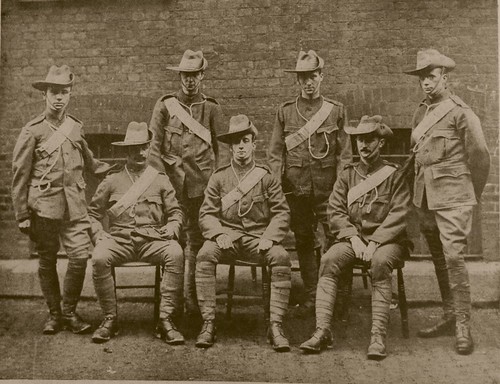
In 1881, Post Office employees formed a Volunteer Rifle Company which was expanded to become a battalion in 1868. Volunteers from that unit served during the Boer War in South Africa.

Post Office Rifles Volunteers Boer War

 In 1908 the unit became the 8th (City of London) Battalion, London Regiment (Post Office Rifles) on the formation of the Territorial Force. The Battalion, 1/8th, and its duplicate, 2/8th  would serve  on the Western Front and awarded 17 battle honours. 

8th (City of London) Battalion London Regiment
 (Post Office Rifles) 


National Memorial Arboretum 2024 - Durham Light Infantry

 The Durham Light Infantry memorial features a larger-than-life bronze statue of a DLI bugler symbolising  the moment of the ceasefire in Korea in 1953. It was unveiled in July 2012 together with a twin memorial in front of the Town Hall in the city of Durham. 

Durham Light Infantry Memorial

The Durham Light Infantry (DLI) was formed in 1881 with the amalgamation of the 68th (Durham) Regiment of Foot (Light Infantry) and the 106th Regiment of Foot (Bombay Light Infantry). 

During the First World War the 22 Battalions of the DLI saw active service on the Western Front (at Ypres, Loos, Arras, Messines, Cambrai, the Somme and Passchendaele), in Italy, Egypt, Salonika and India. They were awarded 29 battle honours and won six Victoria Crosses. The Commonwealth War Graves Commission records 13,290 DLI  officers and men lost during the conflict. 

In the Second World War 10 DLI battalions saw active service overseas in France, Burma, North Africa, Italy, and France and Germany. In May 1940 in Belgium, Richard Annand of the 2nd Battalion DLI became the first soldier of the Second World War to win the Victoria Cross. Another would be awarded to Adam Wakenshaw for his actions at Mersa Matruh, Egypt, in June 1942. The Commonwealth War Graves Commission records 3,094 DLI  officers and men lost during the conflict. 

Those losses included Private Matthew Stephenson, 8th Battalion DLI,  who was lost as a POW when the SS Scillin was torpedoed in November 1942. 

Field Marshall Montgomery wrote of the Durham Light Infantry;

Of all the infantry regiments in the British Army, the DLI was one most closely associated with myself during the war. The DLI Brigade [151st Brigade] fought under my command from Alameim to Germany ...It is a magnificent regiment. Steady as a rock in battle and absolutely reliable on all occasions. The fighting men of Durham are splendid soldiers; they excel in the hard-fought battle and they always stick it out to the end; they have gained their objectives and held their positions even when all their officers have been killed and condition were almost unendurable.

The The Durham Light Infantry memorial bears an inscription of a quote by Montgomery of Alamein;

There maybe some Regiments as good but I know of none better.

Durham Light Infantry Memorial
Montgomery Inscription

Durham Light Infantry Memorial
WW1 and WW2 Battle Honours


The DLI would see active service in Korea in 1952-1953. Twenty-four soldiers were killed or died of wounds and three men were missing, presumed killed in action, as their bodies were never found. 

The Durham Light Infantry were on active service in 1958 during the Cyprus Emergency and from 1965 to 1966 in Borneo. On 26 February 1966 the D.L.I. suffered its last combat fatality when Private Thomas Griffiths was killed. 

In 1968 the Durham Light Infantry amalgamated with three other country light infantry regiments to form the Light Infantry. 

Durham Light Infantry Memorial IJ