Blog Search


Wednesday, 20 August 2014

Op Ducy - Bayeux Memorial


 The Bayeux military cemetery and memorial has records nearly 6,000 casualties who lost their lives in the Liberation of Normandy.
 
The memorial lists the casualties who have no known grave by their Regiment. Included on the wall is a list of x men from 1st Battalion Tyneside Scottish (Black Watch). The majority of those commemorated lost their lives in the Battle of Rauray July 1st 1944
 
 
Bayeux Military Memorial

Bayeux Military Memorial
Tyneside Scottish


Bayeaux Military Memorial
Wreath Laying
Tyneside Scottish panel

Rank Initials Surname Died Aged
Lieutenant R C BOLTON 01/07/1944 30
Lance Corporal E JEWITT 01/07/1944 24
Private J BASSETT 26/06/1944 19
Private D H W DORRELL 01/07/1944 18
Private J A GIBSON 10/07/1944 28
Private C HAMER 01/07/1944 19
Private H HOLDEN 01/07/1944 19
Private D L HUGHES 01/07/1944 19
Private T H McLINTOCK 01/07/1944 24
Private D S O'CONNOR 01/07/1944 17
Private B SCOTT 11/07/1944 29
Private T WILLIAMSON 01/07/1944 19


Saturday, 16 August 2014

Audinghen - Krupp 5 Rail Gun

Krupp 28-cm-Kanone 5 (E)

 The K5 was the result of a crash program launched in the 1930s to develop a force of railway guns to support the Wehrmacht by 1939. K5 development began in 1934 with first testing following in 1936 at the Firing Test Range Rügenwalde-Bad (German: Schießplatz Rügenwalde-Bad) in Farther Pomerania at the South coast of the Baltic Sea. Initial tests were done with a 150 mm barrel under the designation K5M.

Manufactured by Krupp the K5 mounted a 21.5 metres (71 ft) long gun barrel in a fixed mounting with only vertical elevation of the weapon. This gondola was mounted on a pair of 12-wheel bogies designed to be operated on commercial and military rails. This mounting permitted only two degrees of horizontal traverse. The carriage had to be aligned on the rails first, with only minimal fine leveling capable once halted.

Three guns were installed on the English Channel coast to target British shipping in the Channel, and proved successful at this task.


Krupp 5 280 mm Rail Gun

Krupp 5 280 mm Rail Gun

Calibre: 283 mm (11.1 in
Shell : 255 kg (562 lb)
Range: 64 km (40 mi)
Rate of Fire: 15 rounds per hour

Krupp 5 280 mm Rail Gun - Leopold

Krupp 5 280 mm Rail Gun - Breech Mechanism

Krupp 5 280 mm Rail Gun - Ammunition Crane

Krupp 5 280 mm Rail Gun

Audinghen - Battery Todt

On the 23rd March 1942 Hitler issued Fuhrer Directive 42 ordering the creation of the Atlantic Wall, coastal defences which would stretch 1,500 miles from northern Norway to the coast of Spain. The aim was to protect ports and prevent Allied invasion of Europe.

The defences consisted of over 15,000 strong points including coastal batteries, emplacements and concrete pill boxes supplemented by obstacles, minefields and barbed wire.

The Todt Battery is located on the Gris Niz, near Audinghem, 30km south west of Calais. Named after German Engineer Fritz Todt, it became operational in February 1942.

The battery consisted of 4 casemates each housing a 380 mm (15 inch) guns.

Todt Battery diorama

Todt Battery casemate 2014

Todt Battery casemate 1944

The 380mm (15 inch) guns were developed as naval guns and manufactured by Krupp. They were capable of  firing 800 kg (1,800 lb) shell up to a range of 35.6 km (22.1 miles).
 
Todt Battery Casemate
Todt Battery casemate aperture
 
Todt Battery - 380mm gun WW2
 The garrison for the battery was provided by naval personnel, the Kreigsmarine 244th Naval Coastal Battalion.


On the 29th September 1944 the Todt Battery was captured by Canadian troops following a heavy bombing raid by the RAF.

Atlantic Wall Museum

 
 One casemate at the battery houses the Atlantic Wall Museum.

Atlantic Wall Museum

Atlantic Wall Museum

Atlantic Wall Museum - Range Finders

German Halftrack

German PAK40 Anti-Tank Gun

Wednesday, 13 August 2014

Perth - Balhousie Castle


Source: http://en.wikipedia.org/wiki/Balhousie_Castle

Balhousie Castle dates to 1631, though its origins are believed to go back a further three hundred years. It originally served as the seat of the Earls of Kinnoull, and stood within a walled enclosure containing subsidiary buildings, orchards etc., on a terrace overlooking the North Inch.

After falling into neglect in the early 19th century, the Castle was 'restored' and extensively remodelled on a larger scale in 1862-63 in the Baronial style by the architect David Smart. No original features survive except for parts of the original rubble walls on the east side.

In 1962, the Castle became the Regimental Headquarters and Museum of The Black Watch.  The Regimental Trustees bought Balhousie Castle in January 2009
 

Perth - 51st Highland Division Memorial

Perth

51st Highland Divisional Memorial

 
Source: 51st Highland Division web site
 
The 51st Highland Division was officially formed in 1908 in a reshuffle of the Territorial Army, as a collation of all the kilted Highland regiments. Over the years that followed, until its disbandment in 1967, the 51st Highland Division served with great distinction. Their exploits in the Second Word War may have earned them their legendary status, but the Highland Division had been renowned since the First World War for their bravery and ability in combat.
They served in France in the British Expeditionary Force (B.E.F.) in 1915 and achieved a great deal on the Somme, at Beaumont Hamel, Arras, the 3rd Battle of Ypres, Cambrai and the Aubers Ridge before the final costly actions of the First World War.            
                    
After the peacetime period between the wars, the 51st Highland Division was mobilised again in 1939 for deployment to France in January 1940 as part of the B.E.F. After the initial operations, as the B.E.F. retired on Dunkirk and the Division formed a defensive perimeter around St. Valéry.

Here, in what would be its darkest chapter, the Division was isolated, abandoned and forced to surrender. Fortunately, one of its brigades, 154 Brigade - which had been detached, was able to escape through le Havre.

The Division was reborn from its twin, the Territorial 9th Scottish Division, along with many of those that had escaped St Valéry. Changing its name to the 51st Highland Division, it was deployed to North Africa, spearheading Montgomery's attack at El Alamein and pursuing the Axis forces through Tripoli, Medenine, Mareth and Wadi Akarit to final victory in North Africa.

After a brief respite the Division took part in Operation HUSKEY, the Allied invasion of Sicily, where is saw much hard action at Vizzini and Francofonte, Gerbini and Sferro before retuning home to prepare for D Day.

The Division landed at Normandy on the 7th June 1944 as part of 1 Corps and fought in the breakout from the beachhead and in the return to St Valéry, conducted operations in the Low Countries, spent Christmas in the Ardennes, and went on to negotiate the Reichswald and the Rhine Crossing en route to final Victory in Europe.


Tuesday, 12 August 2014

Perth - Polish Forces Commemoration

Perth

Perth

Perth Salutation Inn

Perth Salutation Inn

Perth West Bridge

Perth West Bridge showing flood levels

Perth

Polish Forces Commemoration

Perth Town Hall

Perth - Commemoration to Polish Forces

Polish Forces came to Scotland following the fall of France in 1940. The Poles were reformed into the 1st polish Corps and tasked with the defence of the east coast of Scotland from German invasion.

Perth River Tay


Monday, 11 August 2014

Greenham Common


RAF Greenham Common was located in Berkshire, south east of Newbury, about 50 miles (80km) west of London. It was opened in 1942 and during World War Two served both the RAF and USAF.

After WW2 it was operated by the American Air Force Strategic Air Command.  Medium sized American bombers were staioned at the airfield, though the runways were strengthened to handle B52's. In 1968 the base transferred to the US Air Force in Europe and became the main location for the United States Military Postal Mail.

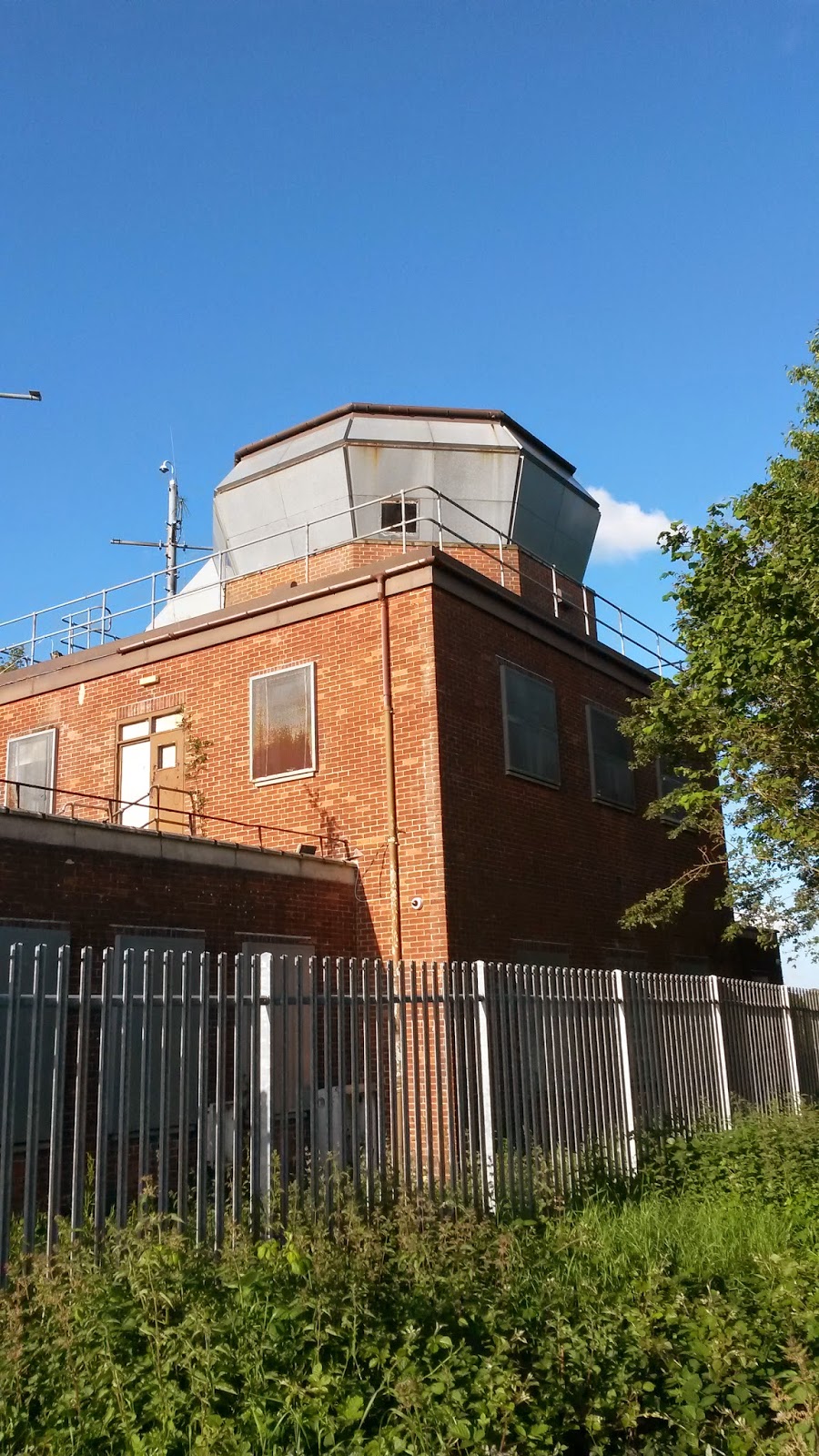
Control Tower
Greenham Common

Control Tower
Greenham Common


Runway Greenham Common


Greenham Common gained it's notoriety in 1980 when it was announced that RAF Greenham Common would become the first cruise missile site in Britain.
Over the next three years the Ground Launch Cruise Missiles (GLCM) Alert and Maintenance Area – GAMA was constructed. This was a maximum security Quick Reaction Alert area with 6 large above ground bunkers where operational cruise missiles were stored. The shelters were built to withstand a 1,100 kg (2,500 lb) conventional bomb, or an air burst nuclear explosion above the base. The first missiles arrived in November 1983 under the control of the 501st Tactical Missile Wing.

Greenham Common Bunkers

Greenham Common Bunker

Greenham Common Bunker behind security fence

Greenham Common Bunker

The deployment of Cruise Missiles raised wide spread protest and over 40 Peace Camps were established around the bases perimeter.

The bunkers each contained 2 Launch Control Centres and 4 Transport Erector launchers which would be deployed to firing locations once an alert was ordered. The missiles were an intermediate ballistic missile which was targeted on the Soviet Union and Eastern Bloc countries.
Cruise Missile Launcher
The BM109G GLCM carried a nuclear war head with a yield of 200kt and had a range of 2,500 km (1,600 miles). Flying at subsonic speed of 800km per hour (500 mph), and was capable of hitting Moscow within 4 minutes of launching.


A 200kt was smaller than the bombs used on Hiroshima and Nagasaki which measured 250kt.

 
In 1986 at a summit in Reykjavik, Iceland, President Ronald Regan of the USA and General Secretary of the Soviet Union Mikhail Gorbachev agreed to limit the number of nuclear war heads resulting in treaty being signed in 1987.
The treaty led to the removal of all nuclear weapons from the base, the last weapon leaving in March 1991. In September of that year the US Air Force returned the airfield to the Ministry of Defence who declared it surplus to requirements. And it was put up for sale.
Peace Camps remained at Greenham till 2000 to ensure that no further deployment of nuclear missiles took place.